I will be get paid a commission for purchases made through links on this post.
Quick Answer:
The 17 main types of high heels for women are stilettos, pumps, wedges, platforms, kitten heels, block heels, cone heels, slingbacks, ankle-strap heels, peep-toe heels, lace-up heels, spool heels, cork heels, French heels, ballroom dance heels, knee-high boot heels, and chunky heels — ranging from 1-inch kitten heels to 5-inch stilettos.
Table of Contents
Types of High Heels for Women:
There are 17 main types of high heels for women to wear today, ranging from 1-inch kitten heels to 5-inch stilettos. Each style is defined by three things: heel height, heel shape, and the amount of coverage across the foot. Below, we break down every type — with pictures, comfort notes, and the occasions each one suits best.

Designer high heels are built for both comfort and durability — full leather construction around the foot, ankle, and calf gives support that budget styles can’t match. Below are the 17 different types of heels covered in this guide:
- Knee-High Leather Boots:
- Stilettos
- Chunky Heels Shoes
- Ankle Strap Heels
- French Heels
- Ballroom Dance Shoes
- Slingback Heel
- Spool Heels
- Platform Heels
- Cork High Heels
- Pumps
- Wedge Heels
- Cone Heels
- Peep Toe Heels
- Kitten Heels
- Lace-Up Heels
- Comma Heels
1) Knee-High Leather Boots:
Rating: ⭐⭐⭐⭐ (4.8/5)
Buy Product on Amazon
Knee-high leather boots are boots built on a heel — usually a 2 to 4 inch block or stiletto post — that rise to just below the knee. The classic construction pairs a full leather upper with a leather lining and sole, a pointed or almond toe, and a side zip for entry. Because the shaft wraps the entire calf, the boot holds the leg’s shape more securely than an ankle boot, which is part of why the style reads as more formal and structured than a shorter alternative.
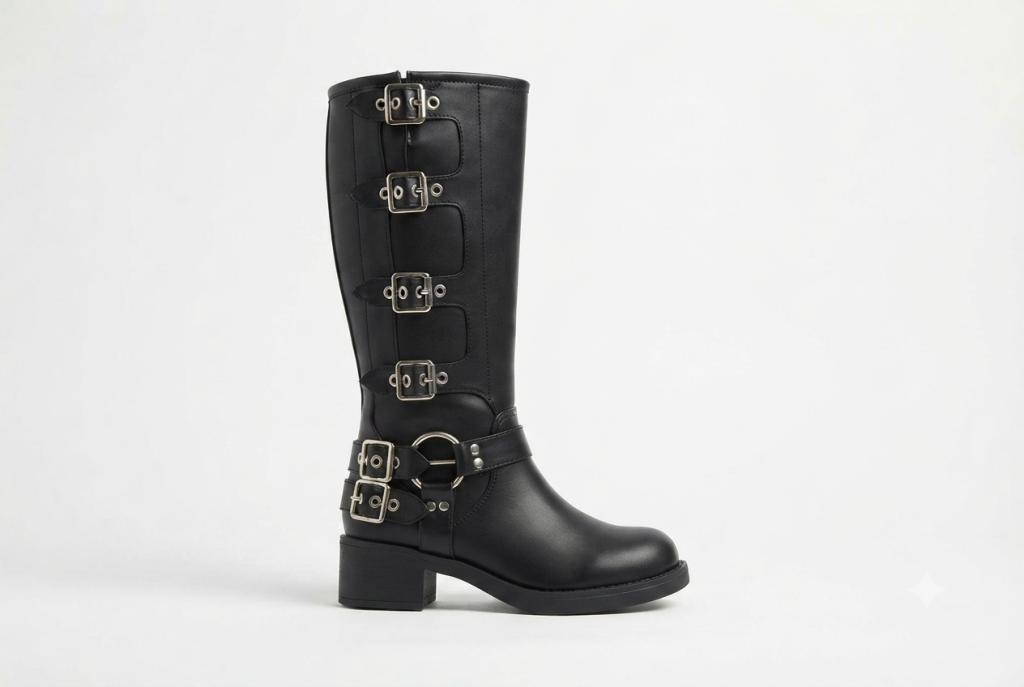
Most retail pairs run true to size in the foot but vary widely in calf circumference, so measuring your calf before buying online matters more here than with almost any other heel category. Knee-high leather boots work best from late autumn through early spring, paired with skirts, dresses, or skinny jeans tucked into the shaft — and expect a 2- to 3-week break-in period before the leather molds to your calf and foot shape.
2) Stiletto Heel:
Rating: ⭐⭐⭐⭐ (4.8/5)
Buy Product on Amazon
This is one of the best types of high heels for women. Stilettos are defined by a heel post under 0.5 inches wide and a height that typically ranges from 3.5 to 5 inches, making them the tallest and thinnest heel category available. The narrow post concentrates your full body weight onto a small contact point, which creates the elongated leg line the style is known for — but it also means less stability on grass, cobblestone, or uneven flooring. Quality stilettos use a steel or reinforced shank inside the heel itself, since a thin heel without internal reinforcement will bend under repeated wear.
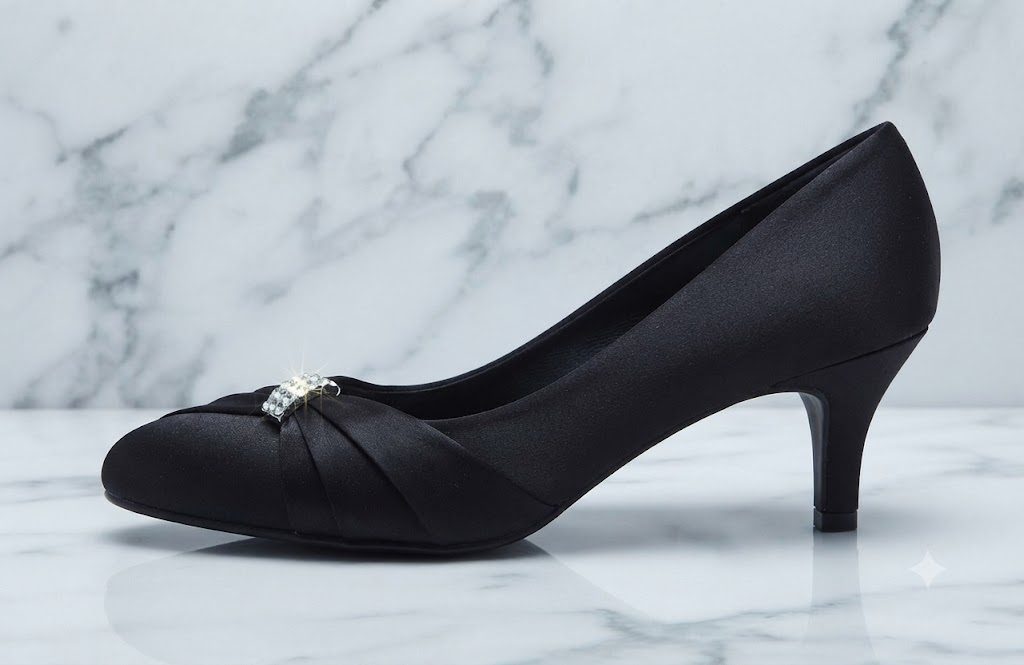
Because of the narrow base, stilettos are best reserved for indoor or paved environments — weddings, offices with carpeted or tiled floors, and evening events. First-time wearers often do better starting at 3 inches rather than jumping straight to 4.5 or 5 inches, since balance improves gradually rather than all at once. A padded insole reduces forefoot pressure, which is where most stiletto discomfort actually comes from.
How to Wear Stilettos Without Discomfort:
Breaking in a new pair gradually — an hour or two at home on carpet before a full event — reduces the blistering that comes from wearing a stiff heel for the first time all day. Silicone heel grips at the back and a metatarsal (ball-of-foot) cushion address two separate pain points, since heel slip and forefoot pressure come from different parts of the shoe.
For anyone new to stilettos, a 3-inch heel with a slightly thicker post — closer to 0.75 inches than a razor-thin 0.5-inch pin — offers a noticeably easier balance curve without losing the elongating silhouette the style is known for. Reserving true stilettos for shorter events.
3) Chunky Heels Shoes:
Rating: ⭐⭐⭐⭐ (4.8/5)
Buy Product on Amazon
Chunky heels use a wide, block-shaped post — usually 2 to 3.5 inches tall and at least an inch across at the base — which spreads body weight over a larger surface than a stiletto or cone heel. This wider footprint is the main reason chunky heels are consistently rated as more stable and easier to stand or walk in for longer stretches. The style has cycled in and out of mainstream fashion since the 1970s platform era, but it never fully disappears because the comfort trade-off is hard to beat.
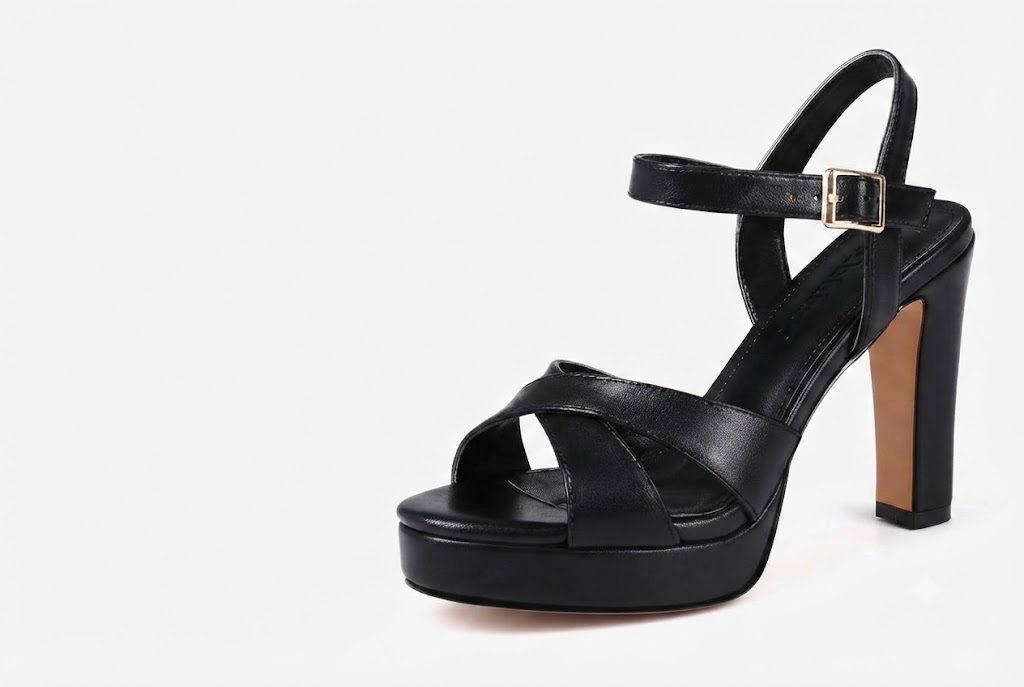
Chunky heels pair naturally with structured trousers, midi skirts, and denim, and look bulkier against very thin, fitted hemlines. If you want an everyday heel that can handle a full workday, a chunky heel in the 2 to 2.5 inch range is a safer choice than a stiletto of the same height, since the wider base reduces the muscle fatigue that comes from constant micro-balancing..
4) Ankle Strap Heels Shoes:
Rating: ⭐⭐⭐⭐ (4.8/5)
Buy Product on Amazon
There are different types of heels in the market, but these are the best choice for corporate women. Ankle strap heels add a thin strap that wraps around the ankle and fastens with a buckle or clasp. This does two things: it locks the heel in place so the foot can’t slide forward inside the shoe, and it visually breaks up the leg line at the ankle rather than elongating it the way a strapless pump does. The strap itself can sit on a stiletto, block, or wedge base, so “ankle strap” describes an added feature rather than a heel shape on its own.
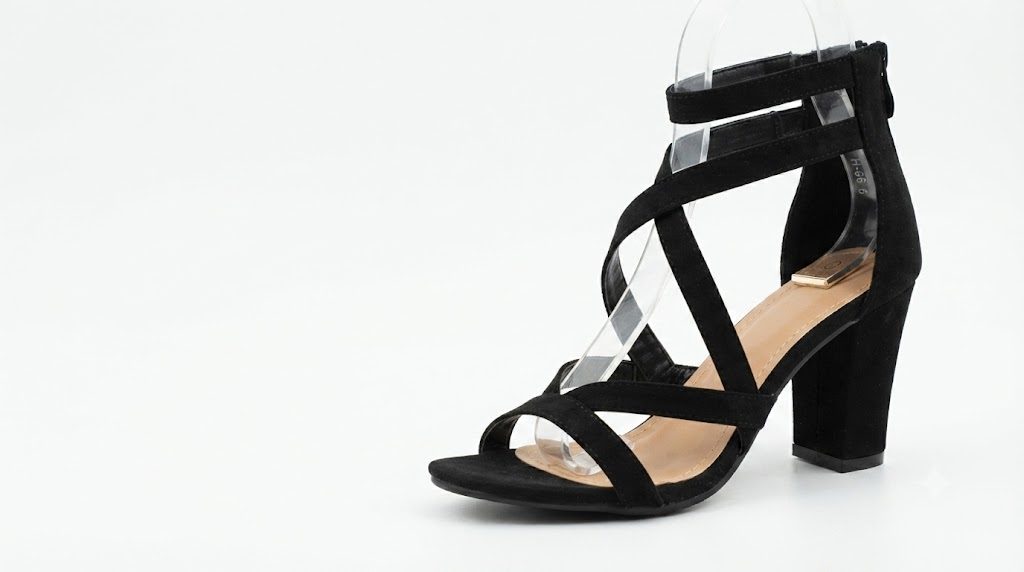
Because the strap prevents forward slide, ankle strap heels are one of the more secure options for events involving hours of standing — weddings, cocktail parties, or work presentations. When buying online, check the strap’s adjustment range specifically: too tight and it digs into the ankle bone after 2 to 3 hours; too loose and it defeats the entire purpose of the design.
5) French Heel:
Rating: ⭐⭐⭐⭐ (4.8/5)
Buy Product on Amazon
The French heel is a curved, tapering heel shape that flares slightly outward at the base and narrows toward the top where it meets the shoe — a silhouette that traces back to 18th-century European court shoes and was later revived in mid-20th-century pump designs. It typically sits in the 2 to 3 inch range, shorter and more moderate than a stiletto, which makes it one of the more wearable “vintage” heel shapes for a first-time buyer.
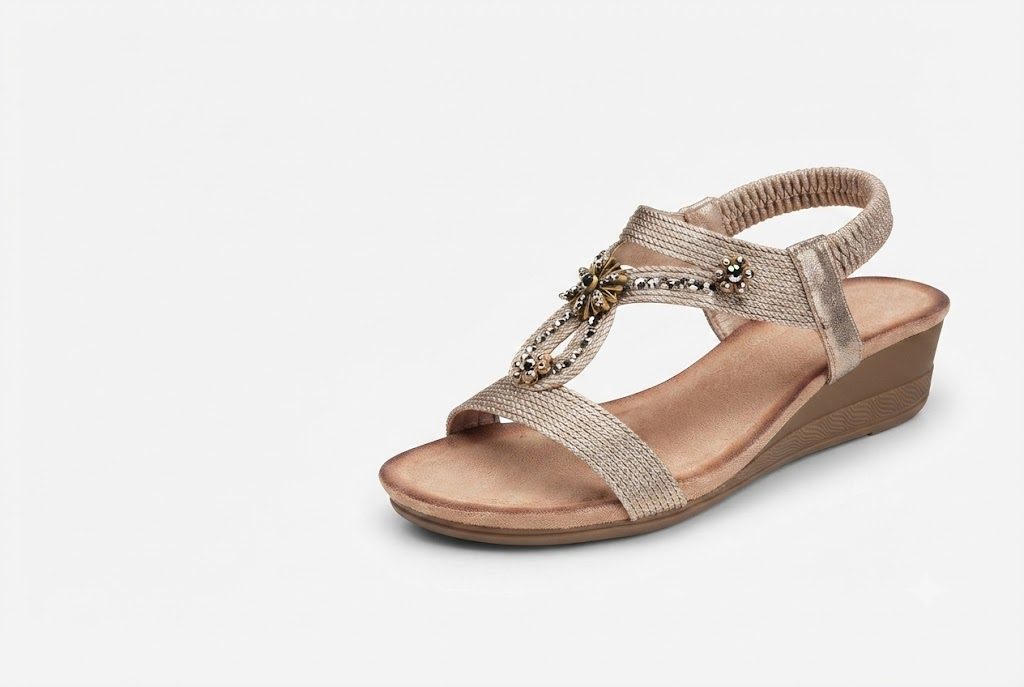
Because of its curved profile, the French heel reads as classic and slightly retro rather than modern or edgy, which is why it shows up most often on pumps and closed-toe dress shoes rather than sandals or boots. It pairs well with tailored dresses and pencil skirts, and it’s a reasonable middle ground for anyone who wants heel height without a stiletto’s balance demands.
6) Ballroom Dance Shoes:
Rating: ⭐⭐⭐⭐ (4.8/5)
Buy Product on Amazon
Ballroom dance heels are built for lateral movement and pivoting, not walking in a straight line, which is why the construction differs from a standard dress heel. The heel post is usually flared and set slightly forward under the arch rather than the back of the foot, and the sole is typically suede or micro-suede so it grips a hardwood or sprung floor without sticking. Heights generally run 2 to 3 inches for Latin styles and slightly lower for smooth or standard dance.
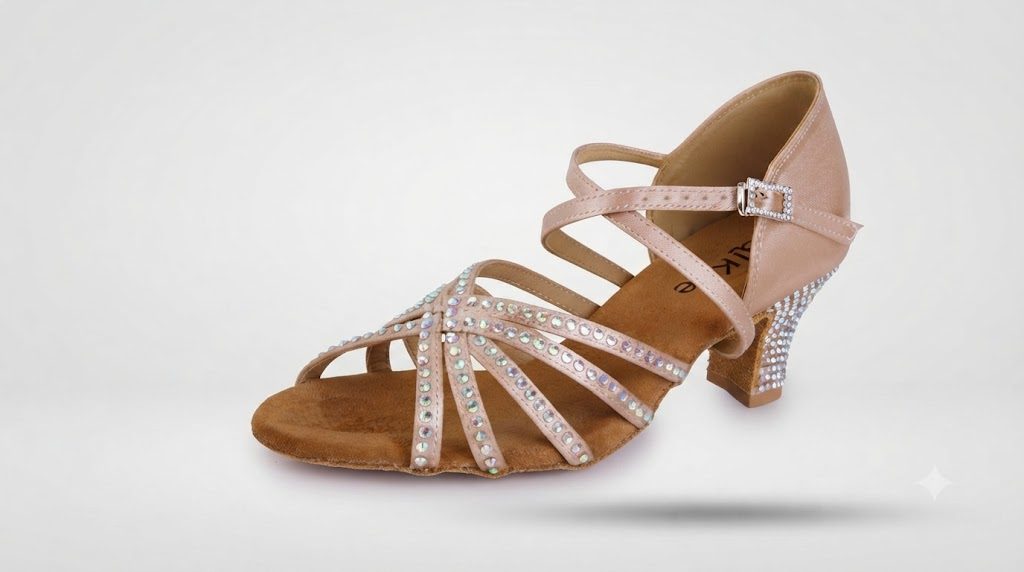
Wearing ballroom shoes outside a dance floor isn’t recommended long-term, since the suede sole wears out quickly on concrete and loses grip. If buying a first pair, get fitted at a dance-specific retailer rather than sizing by street-shoe measurements — ballroom shoes typically run narrower, and the usual half-size-up rule doesn’t apply here.
Whether you are a dancer or not, it does not matter; you can also wear ballroom dance shoes to make your life stylish.
7) Slingback Heel:
Rating: ⭐⭐⭐⭐ (4.8/5)
Buy Product on Amazon
A slingback heel replaces the closed back of a standard pump with a thin strap wrapping around the back of the ankle, leaving the heel of the foot exposed. This construction can sit on virtually any heel base — stiletto, block, or kitten — so “slingback” describes the back construction rather than the heel shape itself. The open back makes the shoe noticeably cooler and easier to slip on than a fully enclosed pump.
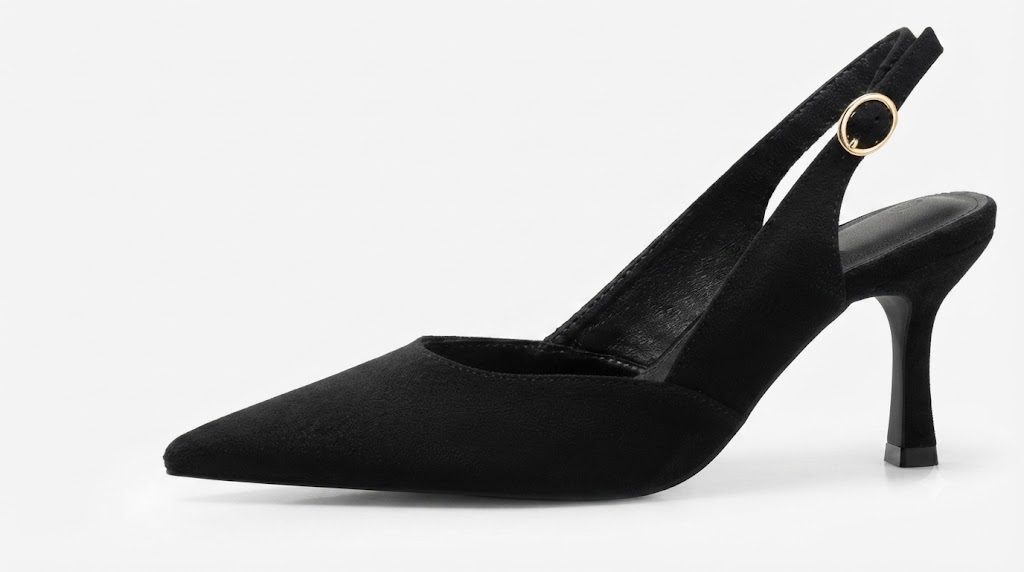
Because the strap is the only thing holding the shoe on, fit matters more here than with a closed pump — too loose and the shoe flaps at the heel with every step. Slingbacks pair easily with both dresses and tailored trousers for spring and summer occasions, and are generally safer than a fully strapless heel for anyone worried about the shoe slipping off mid-stride.
8) Spool Heels:
Rating: ⭐⭐⭐⭐ (4.8/5)
Buy Product on Amazon
A spool heel is shaped like an hourglass or sewing spool — wider at the top where it meets the shoe, narrowing sharply in the middle, then flaring back out at the base. This shape gives more visual interest than a straight column heel while still offering a slightly wider ground contact point than a true stiletto, since the base flares back out before hitting the floor. Heights typically range from 2.5 to 4 inches.
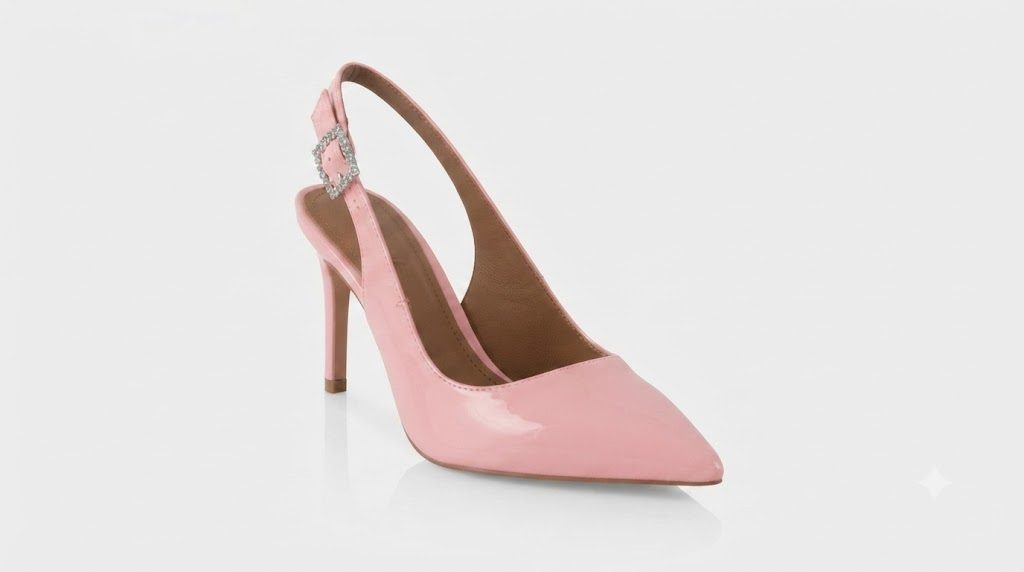
The style is most common at formal events — weddings, cocktail parties, evening functions — where the decorative heel shape complements dressier fabrics like satin or velvet. Spool heels are a reasonable middle option for anyone who wants a statement heel without the full instability of a stiletto, since the flared base gives slightly more standing stability than a straight thin post.
9) Platform Heels:
Rating: ⭐⭐⭐⭐ (4.8/5)
Buy Product on Amazon
Platform heels add a thick sole under the ball of the foot — usually 0.5 to 1.5 inches — in addition to the heel itself, which reduces the effective incline your foot has to hold even when the total heel height reaches 4 or 5 inches. This is the core mechanical difference between a platform and a plain high heel of the same overall height: a 5-inch platform heel with a 1.5-inch platform creates only about a 3.5-inch incline, noticeably more comfortable over several hours than a plain 5-inch heel.
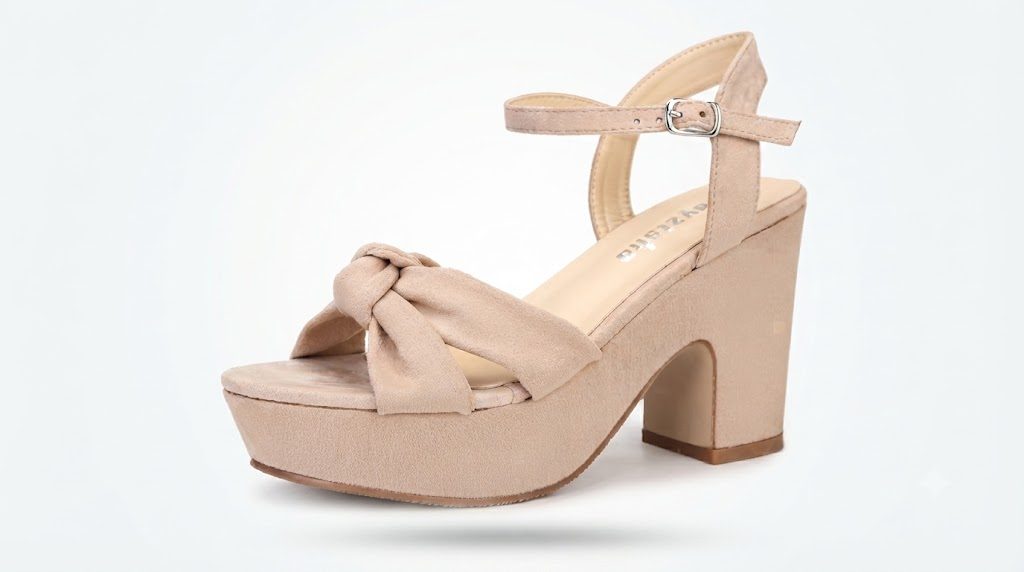
Platform heels became closely associated with 1970s disco fashion and have resurfaced in cycles ever since, most recently in chunky-sole silhouettes that pair height with visible comfort. They suit anyone who wants dramatic height without the balance demands of an equivalent stiletto, and they’re a common choice for events with extended standing, like concerts or all-night receptions.
Platform vs Standard Heels — What Changes:
The platform under the ball of the foot is what separates this style from a plain high heel of equal height, and it’s why two shoes both labeled “5-inch heels” can feel completely different to wear. A 5-inch heel with no platform demands your foot hold the full 5-inch angle for as long as you’re wearing it, while the same height with a platform cuts that angle down substantially.
This is why platforms are often recommended to anyone who wants dramatic heel height for photos or events without the ankle flexibility or balance built up for an equivalent plain heel — the visual height goes up while the physical demand on the foot stays closer to a 3 to 3.5 inch heel. Pairing a platform with an ankle strap adds extra security, since added height also increases leverage on the ankle if the shoe isn’t secured.
10) Cork High Heels Shoes:
Rating: ⭐⭐⭐⭐ (4.8/5)
Buy Product on Amazon
Cork heels use compressed cork, either as the full heel structure or as a wrap over a wood or synthetic core, making the shoe noticeably lighter than an equivalent leather or plastic heel of the same height. Cork also has natural give and slight flex under pressure, which some wearers find more forgiving over a full day than a rigid heel material. The look pairs most often with wedge or block shapes rather than a thin stiletto post, since cork doesn’t hold up well under a narrow concentrated point.
Because cork is natural and breathable, it tends to perform better in warm weather than synthetic materials, which is why cork heels show up most often in spring and summer collections alongside espadrilles. They’re a durable, low-maintenance option for casual and semi-casual wear, though cork shows water damage more visibly than sealed synthetic materials, so it’s worth avoiding in wet conditions.
11) Pumps:
Rating: ⭐⭐⭐⭐ (4.8/5)
Buy Product on Amazon
A pump is a closed-toe, low-cut shoe with no fastening — no laces, straps, or buckles — held on by the shape of the shoe alone, typically on a heel between 2 and 4 inches. This is one of the most versatile heel categories, since the heel itself can be a block, stiletto, or French shape; “pump” simply describes the low-cut, slip-on upper rather than any specific heel construction. That versatility is why pumps remain a staple in most professional wardrobes rather than a seasonal trend item.
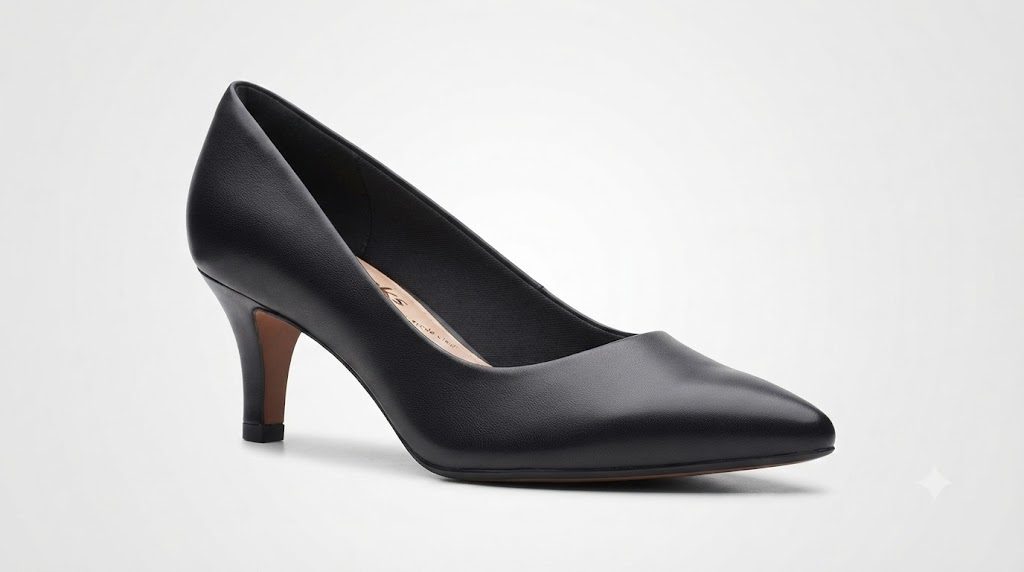
Because pumps rely on shape rather than fasteners to stay on, fit matters more here than with almost any other heel category — a pump even a quarter-size too big will slip at the heel with every step. For office or all-day wear, a block or French heel pump in the 2 to 3 inch range balances professional polish with practicality better than a stiletto pump of the same height.
12) Wedge Heels:
Rating: ⭐⭐⭐⭐ (4.8/5)
Buy Product on Amazon
Wedge heels replace a separate heel post with a single solid piece running from the heel to the ball of the foot, which is the main reason they’re consistently rated one of the most stable heel styles available. Because the entire sole contacts the ground rather than a narrow point, body weight distributes evenly across the whole foot instead of concentrating at the back. Wedges typically run 2 to 4 inches and come in strappy, closed-toe, and espadrille-style variations.
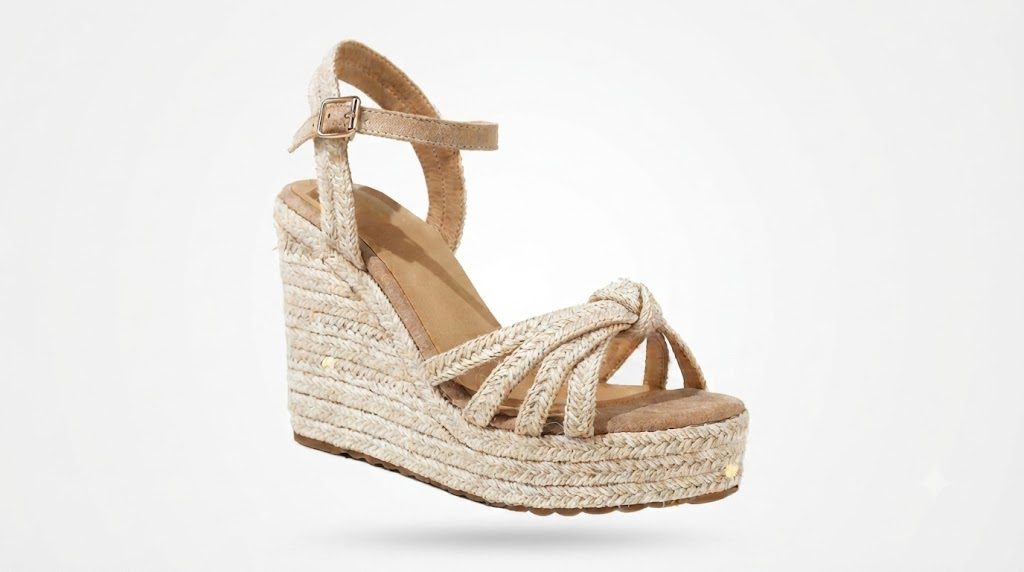
Wedges hold up better than stilettos or pumps on grass, gravel, and cobblestone, making them a common choice for outdoor weddings and garden events where thinner heels would sink or catch. The trade-off is that a wedge reads as more casual than a thin heel, so most style guides reserve them for daytime or outdoor occasions rather than black-tie evening events.
Styling Wedge Heels for Different Occasions:
For daytime and outdoor events, pair wedges with maxi dresses, skater-style dresses, or wide-leg trousers — the solid sole handles grass or uneven pavement far better than a stiletto or spool heel in the same setting. A strappy wedge in a neutral tone like tan or black works across both casual and semi-formal outfits, making it one of the more cost-effective heel styles to own if you only want one or two pairs total.
Closed-toe wedges extend the style into cooler months and pair well with denim, skater skirts, and casual dresses, while espadrille wedges are the more common warm-weather variation. If comfort is the priority over height, look for a wedge under 3 inches with a contoured footbed — the flat sole design already reduces strain, and a shaped insole compounds that comfort advantage further.
Wedge heels are the ideal types of heels for dress-up – they look extraordinary with long maxi dresses, short skater dresses and everything in the middle. Also, you can combine wedges with bell bottoms and a cute top – it’s a definitive chic, easygoing look.
13) Cone Heels:
Rating: ⭐⭐⭐⭐ (4.8/5)
Buy Product on Amazon
A cone heel is wide at the top where it attaches to the shoe and narrows steadily down to a smaller, flat-ish base — shaped, as the name suggests, like an upside-down ice cream cone. Because the heel is thicker at the top than a stiletto, it offers noticeably more structural support through the arch and ankle, even though the base itself stays narrower than a block or wedge. Heights typically fall between 2 and 4 inches.
Cone heels work as an easy upgrade from a standard pump for anyone who wants more visual interest without moving all the way to a stiletto’s balance demands. They pair well with casual dresses and everyday work outfits, and because the shape tapers gradually rather than jumping straight to a thin point, they tend to feel more forgiving underfoot over a full day than a true spool or stiletto heel of the same height.
14) Peep Toe Heels:
Rating: ⭐⭐⭐⭐ (4.8/5)
Buy Product on Amazon
Peep-toe heels have a small opening at the front of the shoe that exposes just the toes, rather than the fully open front of a sandal. The style traces back to traditional Spanish shoe designs that used woven esparto rope soles, and later became a summer staple because the partial opening keeps feet cooler than a fully closed toe box without exposing the whole foot the way a sandal does. The heel base itself can be a pump, stiletto, or wedge shape.
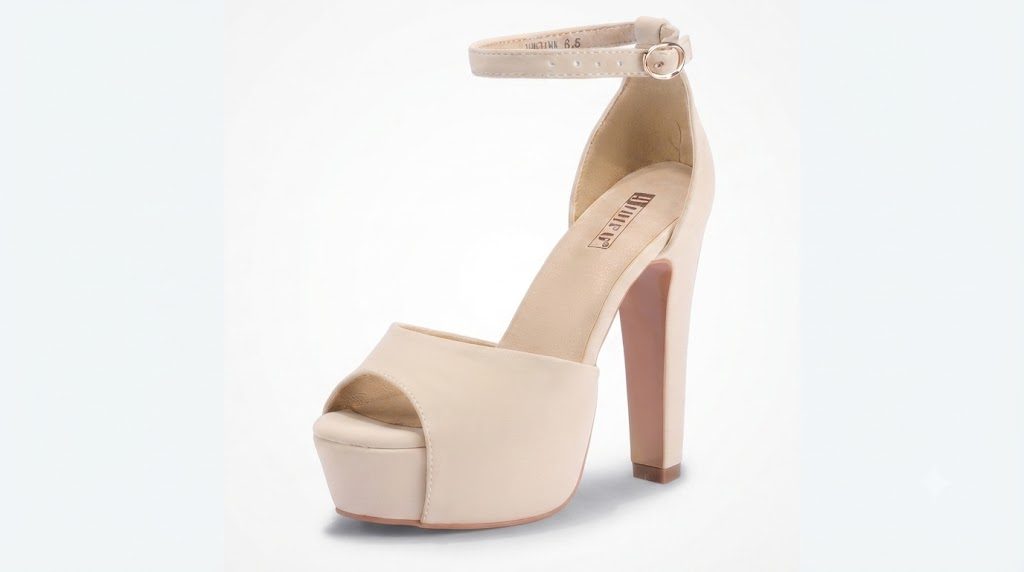
Peep-toe heels are most common in spring and summer collections and pair naturally with A-line dresses and skirts, giving a slightly vintage feel compared to a fully closed pump. Because only the toes show, sizing should be checked carefully — a peep-toe that’s too small will crowd the toes right at the visible opening.
15) Kitten Heels:
Rating: ⭐⭐⭐⭐ (4.8/5)
Buy Product on Amazon
Kitten heels are the shortest true heel style, generally staying under 3 inches with a thin, tapered post similar in shape to a small stiletto rather than a block. Because the heel height is low, the balance demands are far closer to a flat shoe than to a standard pump, which is why the style is consistently recommended as the easiest entry point into heels for anyone who doesn’t wear them regularly.
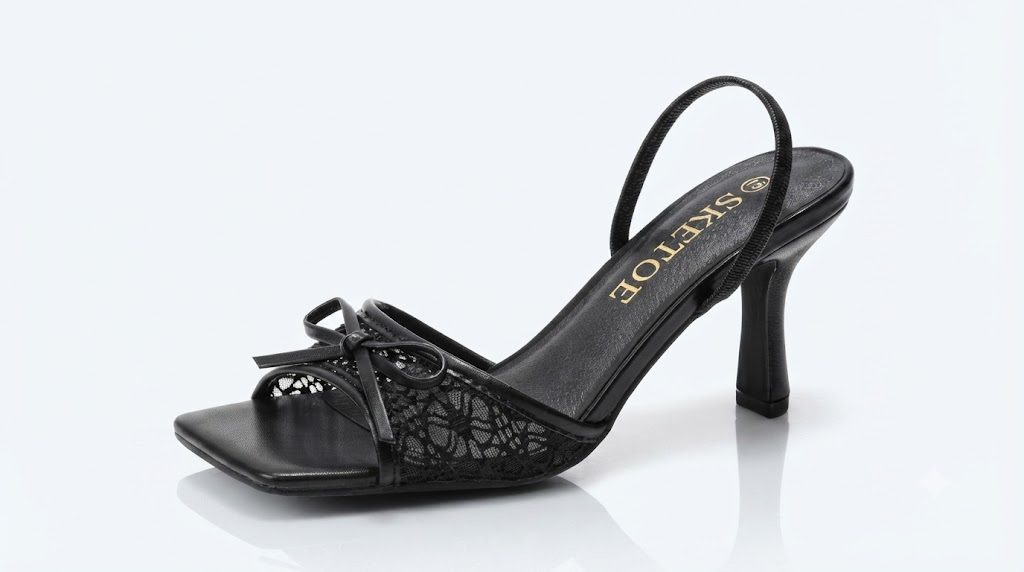
Kitten heels show up across multiple shoe types — pumps, mules, booties, and sandals — since the low, thin heel can be added to almost any base style. They’re a practical choice for offices with long standing hours, for taller wearers who want a small lift without added height, or for anyone transitioning out of flats who isn’t ready for a full 3-to-4-inch heel yet.
16) Lace-Up Heels:
Rating: ⭐⭐⭐⭐ (4.8/5)
Buy Product on Amazon
Lace-up heels close with laces running up the front or side of the shoe rather than a zip, buckle, or slip-on shape. The style draws from two very different sources: the classical ballet flat and pointe-shoe silhouette, and the more structured Roman sandal lacing pattern — the first reads soft and feminine, the second sturdier and more architectural. Both can sit on a block, stiletto, or wedge heel base.
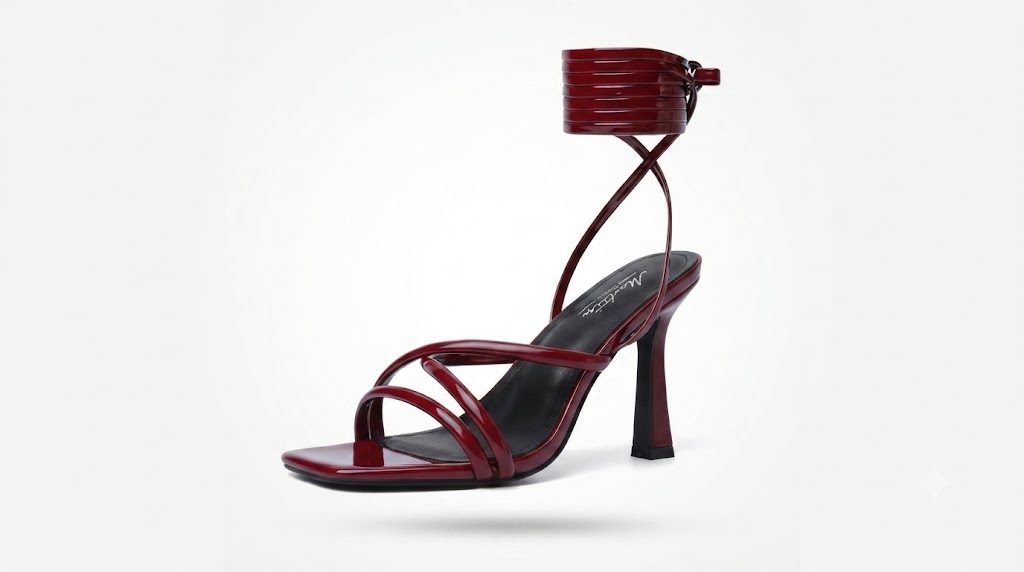
Because laces allow a fully adjustable, closed fit, lace-up heels tend to stay more securely in place than a slip-on pump of the same height, making them a reasonable choice for events involving more walking than standing still. Styling-wise, they pair well with cropped or wide-leg trousers and skater-style dresses, since the visible lacing works best when it isn’t hidden under a hemline.
17) Comma Heels:
Rating: ⭐⭐⭐⭐ (4.8/5)
Buy Product on Amazon
The comma heel gets its name from a heel post that curves in a shape resembling a comma or hook rather than a straight or gently tapered line, making it more of a runway or statement design than an everyday staple. It’s a far less common term in mainstream fashion glossaries than the other 16 styles on this list, and it typically shows up in occasion wear or designer collections rather than in standard retail lines.
If you come across a shoe marketed as a “comma heel,” expect a shorter overall height than a stiletto — the curved shape limits how tall the heel can go while remaining structurally sound — and expect it styled as a statement piece for evening or red-carpet-adjacent looks rather than daily wear. Given how uncommon the term is, it’s worth confirming the exact heel height and shape with the retailer before purchasing.
Types of Women’s Heels with Pictures:
Seeing the different types of women’s heels with pictures side by side makes it far easier to tell them apart than reading descriptions alone — a stiletto and a spool heel can sound similar in a paragraph. Still, one glance at their silhouettes shows exactly why they’re not. This guide covers all 17 types of heels for women, and each one is paired with its own reference image so you can match the shape to the name before you shop.
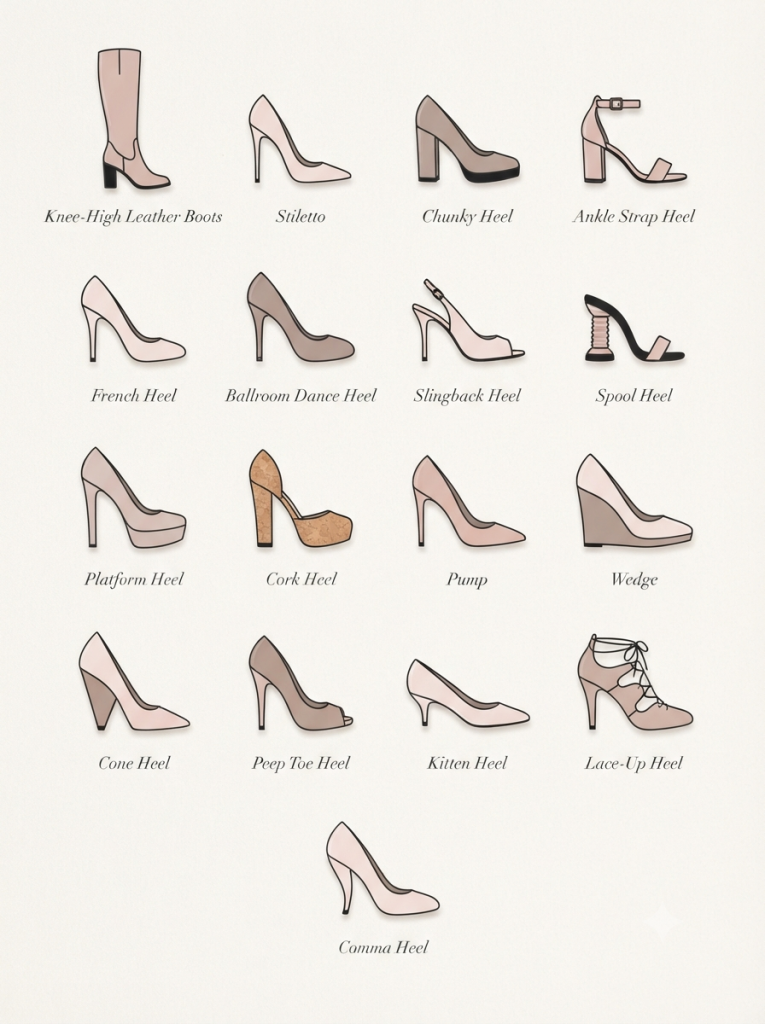
Heel shape is the fastest way to visually sort styles apart. A stiletto’s thin, straight post looks nothing like a wedge’s solid, continuous sole, and a cone heel’s tapered profile is easy to spot next to the hourglass curve of a spool heel. Once you can recognize these shapes on sight, reading a product listing or scrolling through an online shoe rack becomes much faster — you know immediately whether “block heel” or “kitten heel” is the shorter, wider option just from the picture, without needing the exact inch measurements spelled out.
Pictures also make heel height differences obvious in a way text can’t. A 1-inch kitten heel and a 5-inch stiletto look dramatically different in proportion, even though both technically fall under “high heels for women.” Browsing types of high heels with pictures side by side is especially useful if you’re building a first heel wardrobe and want to avoid guessing — you can see at a glance which silhouettes read as formal (stilettos, spool heels), which lean casual (wedges, chunky heels), and which sit comfortably in between (block heels, pumps, French heels).
Whether you’re shopping for your first pair or filling a gap in your closet, matching what you see to the name saves the back-and-forth of returning a shoe that wasn’t shaped the way you pictured it.
Different Types of Heels:
Now that you’ve seen all different types of heels in detail, it’s worth stepping back and look at what actually separates one from another. Every style above breaks down along three factors: heel height, heel shape, and how much of the foot it covers — and once you can sort heels along these lines, comparing new styles you come across later becomes far easier than memorizing 17 names one by one.
Heel height was the clearest divide in the list above. Kitten heels stayed under 3 inches and felt closest to flats, while stilettos climbed to 3.5–5 inches and demanded the most balance. Block heels, wedges, and platforms sat in between, trading some height for a wider, more stable base — which is why they showed up repeatedly as the “most comfortable” picks throughout this guide.
Heel shape explains most of the visual variety between the different types of heels covered here. A stiletto’s post is thin and straight; a cone heel tapers gradually from a wide top; a spool heel curves in like an hourglass; a French heel flares outward before narrowing near the top. Notice that a few pairs above sat at the same height — a pump and a cone heel, for instance — yet felt entirely different to walk in, purely because of this shape difference rather than the number of inches.
The third factor, foot coverage, is what separated styles like the slingback and peep-toe from the fully closed pump earlier in this guide. An open back or exposed toe changes how secure a heel feels and which season it suits, independent of both height and shape.
Keeping these three factors in mind — rather than the style name alone — is the fastest way to predict how any heel, including ones not covered here, will actually feel before you buy it.
Heel Height & Comfort Chart:
Heel height alone doesn’t tell you how comfortable a shoe will actually feel — a 3-inch block heel and a 3-inch stiletto put very different amounts of pressure on your foot despite sharing the same number. The heel height chart below lines up typical height ranges, a realistic comfort rating, and the occasions each style suits best, so you can compare across all the types covered above without scrolling back through every section individually.
Here is a chart of different types of heels :
| Heel Type | Typical Height | Comfort Level | Best For |
| Kitten Heel | 1–3 in | High | All-day office wear |
| Block Heel | 2–3.5 in | High | Outdoor events, walking |
| Wedge | 2–4 in | High | Casual, outdoor, all-day |
| Platform | 3–5 in | Medium | Nights out, added height without incline |
| Pump | 2–4 in | Medium | Office, semi-formal |
| Stiletto | 3.5–5 in | Low | Formal events, indoor |
As a general rule, comfort drops as the heel’s ground-contact area shrinks — kittens, blocks, and wedges spread weight across a wider base, while stilettos concentrate it onto a thin post under half an inch wide. If you’re deciding between two styles at the same height, the wider-based option is almost always the one you can wear longer without foot fatigue, which is why block heels and wedges dominate “most comfortable heel” recommendations across the guide above.
Women’s Heel Shoe:
All the above top 17 women’s heel shoes have been taken based on popularity. There’s no fixed rule for which heel pairs with which outfit — the right choice comes down to comfort, occasion, and personal style rather than a formula. Whether you lean toward a sturdy block heel or a slender ankle-strap stiletto, each of the 17 types of high heels for women above serves a different purpose, and most wardrobes end up mixing two or three styles rather than committing to just one.
Long-Term Effects of Wearing High Heels:
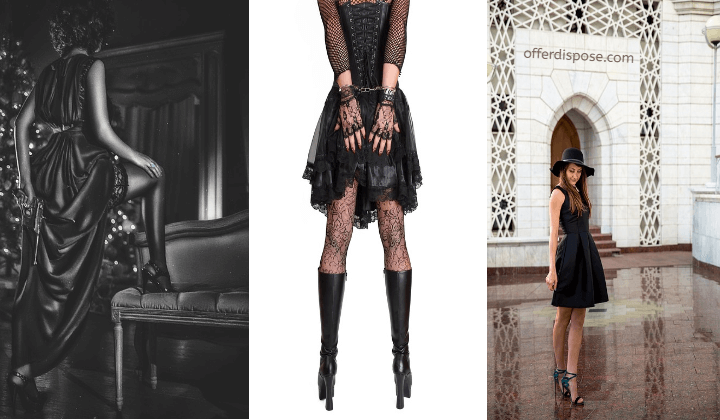
Wearing heels occasionally has little lasting impact, but daily wear over months or years can lead to measurable changes in foot structure, posture, and gait. Heel height shifts weight onto the forefoot instead of distributing it evenly across the whole foot, and over time this can shorten the Achilles tendon and calf muscles — which is why flat shoes sometimes feel uncomfortable after long stretches of regular heel-wearing. Below is what to watch for, and how to build a heel-wearing habit that limits the more common long-term effects.
What to do Before Purchasing High Heel Shoes?
Shopping for heels is easier with a plan rather than picking on looks alone. Prioritize fit over trend — a heel that’s a half-size off causes more discomfort than any material or brand difference ever will. Full-leather construction, especially around the toe box and heel counter, holds its shape and lasts years longer than synthetic materials, which makes the higher price worth it for pairs you’ll wear regularly rather than once.
After purchase, proper care extends a shoe’s usable life significantly — conditioning the leather, keeping heel tips replaced before they wear through to the plastic core, and storing pairs with shoe trees or stuffing to hold their shape. A good cobbler, more than an extended warranty, is what actually keeps a quality leather heel wearable for years instead of one season.
Why You Should Ditch High-Heel Shoes:
Despite their popularity, high-heeled shoes are very bad for the body. Women who wear these shoes extensively are putting themselves at significant risk for health and posture problems. Shoes with a heel that is too high can damage and destroy the delicate bones in your foot. Here are a few reasons why you should ditch these painful shoes and find something a little flatter:
Off-Balance:
High heels concentrate your body weight onto a small area at the back of the foot, which makes balance noticeably harder than in a flat shoe. The taller and thinner the heel, the smaller the contact point supporting you, so even a minor shift in surface — a crack in the pavement, a slight incline — is enough to throw you off.
Slipping:
That same narrow contact point makes heels more prone to slipping on wet tile, polished floors, or loose gravel than a flat-soled shoe. A slip while wearing a tall heel carries more risk than in flats, since the ankle has less room to correct before it rolls — this is one of the more common ways heel-wearers strain or tear a tendon.
Posture Ruin:
Heels tilt the foot forward, which shifts your center of gravity ahead of where it normally sits. To compensate, the rest of the body adjusts — hips push forward, the upper torso leans back — and worn regularly, this altered alignment is commonly linked to lower back discomfort over time.
Bad for Knees:
The same forward lean keeps knees in a slightly bent position for longer stretches than flat shoes require, adding constant low-grade strain through the joint. Podiatrists generally recommend limiting daily heel height and alternating with flats or low heels to reduce this cumulative load on the knees.
The Risk for Feet:
Heels redistribute weight away from the whole foot and concentrate it on the forefoot instead — the taller the heel, the more pressure the ball of the foot absorbs with every step. This uneven loading, repeated over months or years, is a commonly cited factor behind bunions and hammertoes.
Bad for Foot Skin:
The added forefoot pressure combined with a snug toe box creates more friction against the skin than a flat shoe does, which is why blisters and calluses show up more often with frequent heel-wearing. Shoes that are even slightly too tight make this worse, since there’s less room for the foot to shift naturally as you walk.
Bad for Toes:
Narrow, pointed toe boxes — common on stilettos and pumps — push the toes together in a way flat, rounder shoes don’t. Worn often enough over years, this compression is associated with toe misalignment and chronic discomfort, which is why choosing a rounder toe shape matters as much as the heel height itself.
If you’re experiencing ongoing foot, knee, or back pain, it’s worth having it evaluated by a podiatrist rather than self-treating — this guide covers general wear habits, not medical diagnosis.
What You Can Do to Manage Your Heel Pain:
Mild, occasional heel pain from a day in heels usually responds to rest, ice, and a night or two in supportive flat shoes. If pain shows up regularly, especially first thing in the morning, or doesn’t ease within a week of reduced wear, it’s a sign to see a podiatrist rather than push through it — persistent heel pain has several possible causes, and proper treatment depends on which one applies to you. In the meantime, a cushioned orthotic insole can meaningfully reduce daily discomfort for anyone who still needs to wear heels regularly for work or events.
Types of Heels & Plantar Fasciitis — What to Look For:
If you deal with plantar fasciitis or regular heel pain, heel choice matters more than most style guides mention. A heel between 1 and 2 inches with a cushioned, contoured footbed puts less strain on the plantar fascia than either completely flat shoes or heels above 3 inches — both extremes increase tension through the arch. Among the styles covered above, block heels and wedges are generally the safer choice over stilettos or platforms if you’re managing existing heel pain, since their wider base reduces the balance-related muscle tension that can aggravate symptoms.
For everyday wear beyond special occasions, pairing your dressier shoes with a supportive orthotic insole can meaningfully reduce discomfort — see our guide to Dr. Scholl’s Plantar Fasciitis Insoles for options that fit under most heel styles. And if heels aren’t practical for your day-to-day right now, our full roundup of the Best Shoes for Plantar Fasciitis breaks down specific everyday shoes worth considering instead.
Conclusion:
With 17 different types of high heels for women to choose from, the right pair comes down to matching heel height and shape to how you’ll actually use it — a wedge or block heel for all-day comfort, a stiletto or platform for a few hours at a formal event. Investing in well-constructed pairs and caring for them properly means they’ll hold their shape and support your feet for years rather than one season, making them a genuinely worthwhile addition to your wardrobe.