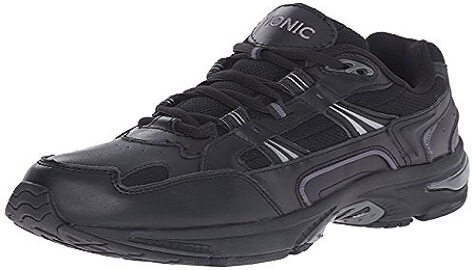
I will be get paid a commission for purchases made through links on this post.
The best shoes for plantar fasciitis overall pick from our storefront is the Dr. Scholl’s Feel Driven. It uses Shock Guard® heel technology. For the best value, pick the FitVille Extra Wide Slip-On. Want a big, trusted brand? Try the Skechers Max Cushioning Endeavor. Just confirm it’s an Arch Fit® model first. Have sensitive or diabetic-adjacent feet? Go with Orthofeet’s Lava Stretch.
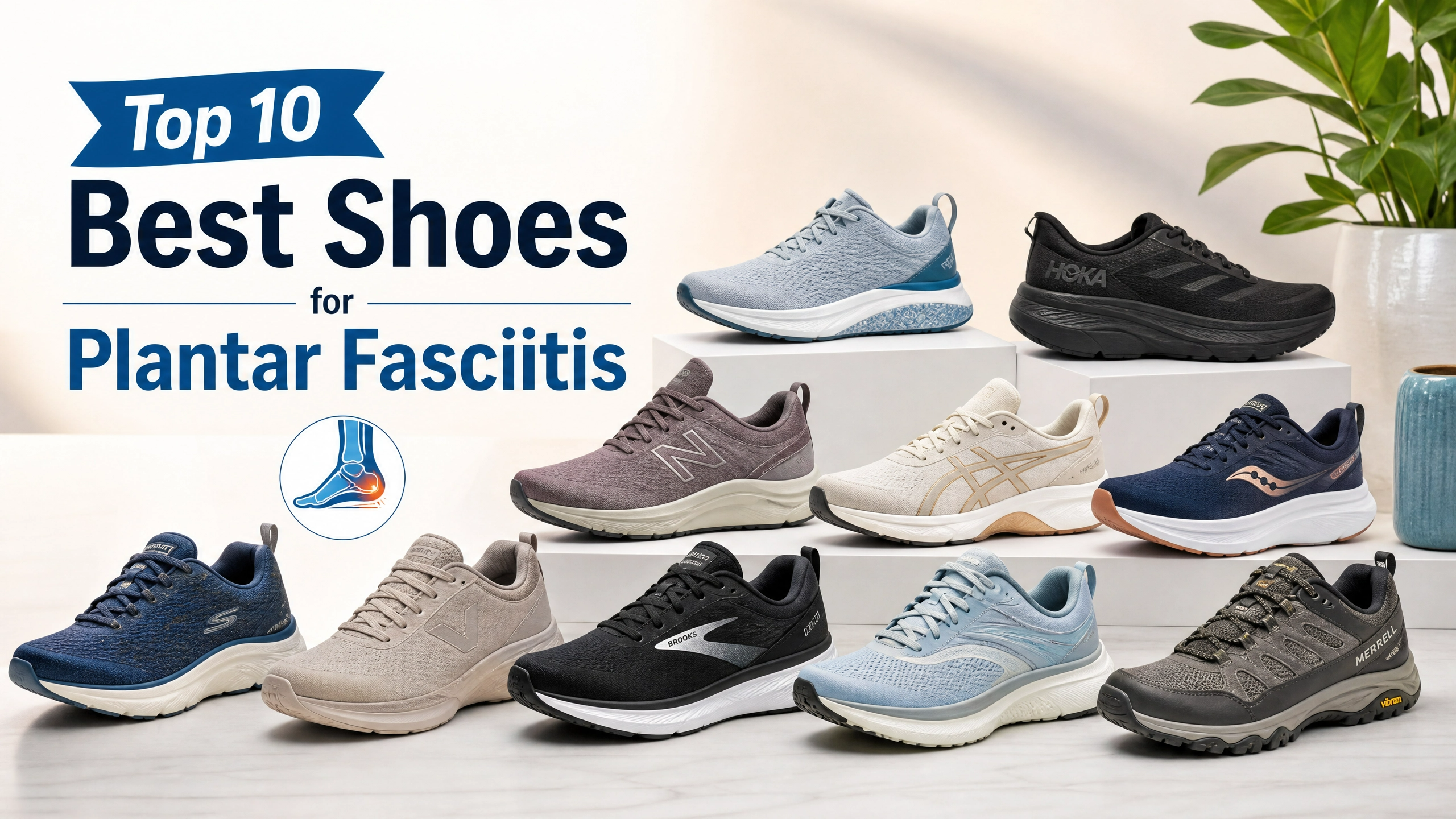
Here is the top 10 best shoes for plantar fasciitis:
- Dr. Scholl’s Feel Driven (Men’s) — Best overall
- Dr. Scholl’s Feel Beyond (Women’s) — Best women’s
- Orthofeet Lava Stretch (Men’s) — Best for sensitive/diabetic-adjacent feet
- FitVille Extra Wide Slip-On — Best value
- Skechers Max Cushioning Endeavor — Best recognizable brand
- AOV Women’s Walking Shoes — Budget women’s pick
- IIV Arch Support Walking Shoes — Lowest-cost everyday pick
- HuJAT Wide Toe Box Shoes — Budget wide-fit pick
- PEAKVIP Men’s Wide Non-Slip Work Shoes — Best for shift work
- WALK-HERO Comfort Slippers — Best indoor/at-home pick
Key Takeaways
- Ten shoes made this list for different needs: walking, work shifts, tight budgets, and indoor wear. They are not ten copies of the same shoe.
- Only three brands here (Dr. Scholl’s, Orthofeet, Skechers/Arch Fit) have real, tested proof behind them. We judge the rest by their stated features and price alone.
- The most important feature is simple: arch support that actually touches your arch. A label isn’t the same as a real, working feature.
- Prices range from $36.99 to $125.97. A higher price does not always mean a better fit for your foot.
- Shoes can ease plantar fasciitis pain. They can’t cure it. If pain does not go away, see a podiatrist.
Understanding Plantar Fasciitis and Why Shoes Matter:
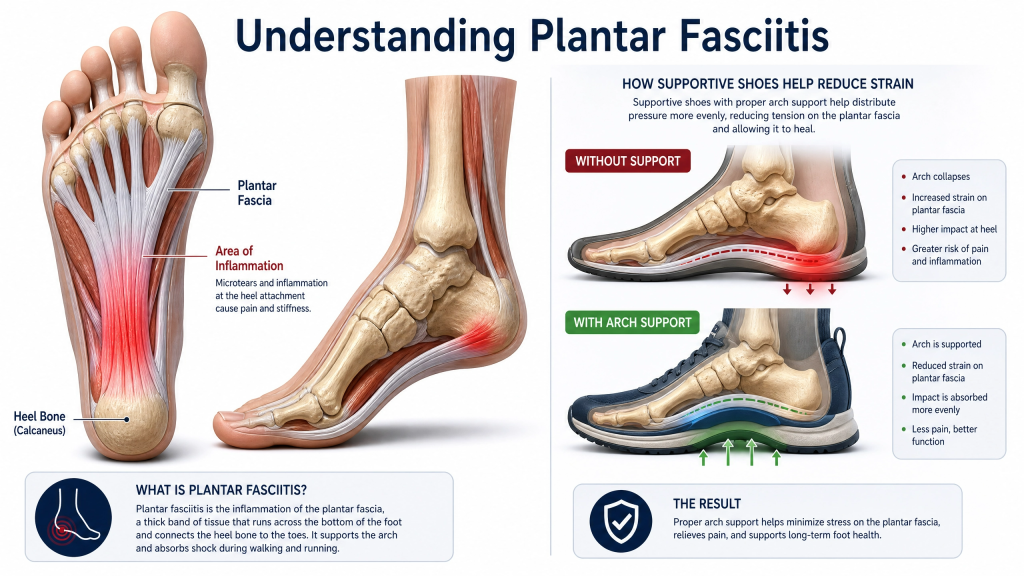
Plantar fasciitis is inflammation in the thick band of tissue under your foot. This band is called the plantar fascia. It runs from your heel to your toes. This condition is the most common cause of heel pain in adults. The pain feels sharp and stabbing at the bottom of your heel.
It’s usually worst with your first few steps in the morning. It also flares up after you sit for a while. The pain eases a bit once you start moving. Then it often returns after you’ve been on your feet a long time.
1) The Mechanism Behind the Pain:
Here’s what happens with every step. Your heel hits the ground. The plantar fascia stretches a little to absorb the shock. It also helps support your arch. Several things can inflame this tissue: too much activity, tight calf muscles, a sudden jump in exercise, or old, unsupportive shoes.
Once it’s inflamed, that normal stretch starts to hurt. A shoe cannot heal the tissue on its own. But it can change how much stress hits that tissue with each step. That’s the whole point behind every pick on this list.
2) How Plantar Fasciitis Shoes Help?
Plantar fasciitis shoes help in a few clear ways. A firm heel counter holds your heel steady. It stops the heel from rolling side to side. That matters because rolling tugs on the fascia’s attachment point. A contoured arch support shifts weight away from your heel and midfoot.
Good cushioning soaks up impact before it reaches the sore tissue. None of this replaces real medical care. But the right shoe is still one of the best non-invasive tools you have. Pair it with calf stretches. In some cases, a night splint helps too. Together, these steps manage pain and help stop it from coming back.
It’s worth naming what does NOT help, too. Flip-flops, ballet flats, and worn-out sneakers are flat and offer no structure. They let your arch collapse more with every step. That actively works against healing. Closing that gap is the whole goal of this list — no matter the price or the situation.
Core Features of Plantar Fasciitis Shoes:
Every plantar fasciitis shoe on this list had to meet the same basic checklist. Brand and price didn’t matter for this part.
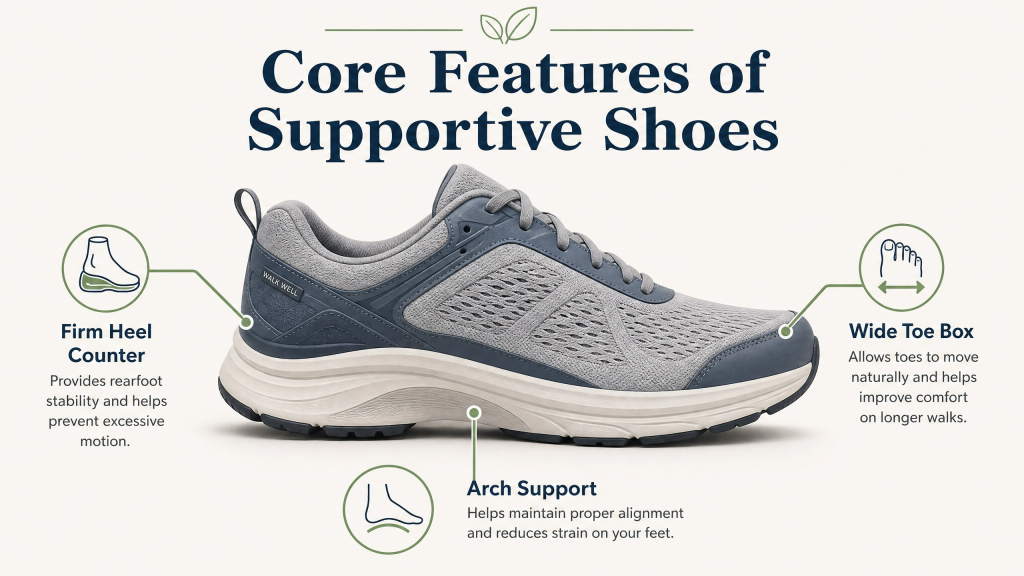
Arch support that actually touches the arch: This is the most common claim in descriptions of plantar fasciitis shoes. It’s also the easiest one to fake. A real arch-support insole is curved, not flat. You should feel it under your foot’s arch. It should feel different from plain, generic cushioning.
A firm heel counter: This is the stiff piece built into the back of the shoe. It’s usually plastic or another reinforced material. Squeeze it — it should resist and hold its shape. A soft, floppy heel counter lets your heel shift with every step. That shift adds more strain to the plantar fascia, not less.
Enough toe box width: A tight toe box is a known risk factor. It can worsen plantar fasciitis symptoms. Why? It changes how you walk and shifts your weight to avoid the discomfort. Some brands here, like Orthofeet and FitVille, build wide and extra-wide versions just for this reason.
A non-slip, well-cushioned outsole: If you stand for work shifts, slip resistance is a safety issue, not just a comfort one. The cushioning below needs to absorb shock. But it shouldn’t feel so soft that your foot loses stability. Podiatric sources often warn against mushy, unstructured midsoles.
An honest return or trial policy: Plantar fasciitis relief is different for everyone. A shoe that helps one person may do nothing for another. Orthofeet’s 60-day wear-test policy stands out here. It’s built around that exact reality, instead of assuming one shoe fits every foot.
Our Methodology:
Top 10 best shoes for plantar fasciitis list came together in a different way than a typical lab-tested guide. We want to be upfront about that. We started with our own Amazon Influencer storefront. It’s a curated set of plantar fasciitis-related products. We removed anything that isn’t truly a shoe — arch support inserts and night splints, for example — even if they showed up in the same storefront category.
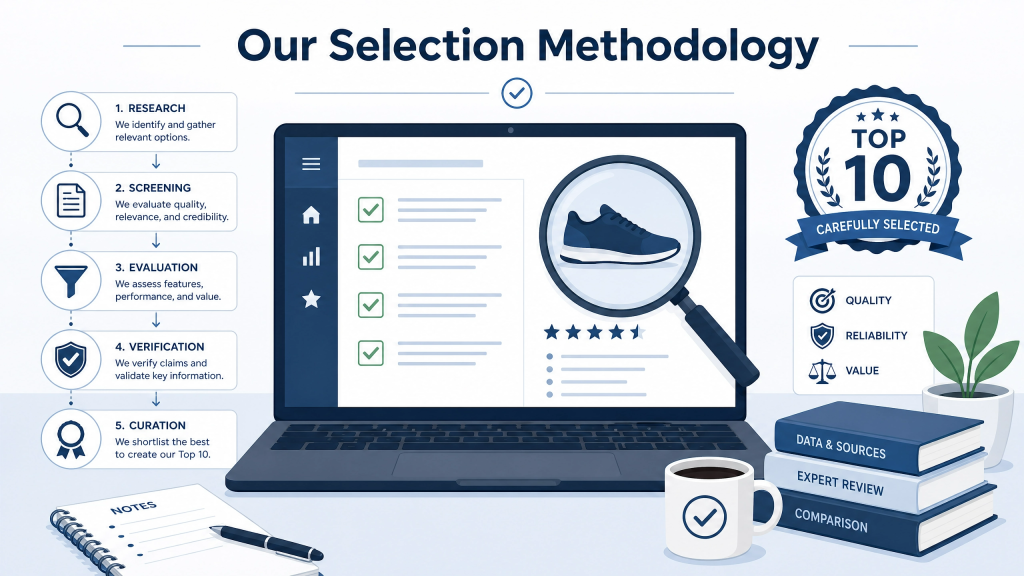
From the remaining shoes, we picked ten. We chose them for variety in use case and brand, not just the highest price or the most reviews. For the three name-brand picks — Dr. Scholl’s, Orthofeet, and Skechers — we checked each brand’s own technology claims. We compared them to the official product pages. Where we could, we also checked outside sources, like podiatrist reviews or the APMA’s seal-of-acceptance list. For the smaller marketplace-only brands, we couldn’t find outside proof of any named technology. Also, we say that clearly in each “cons” section. We won’t pretend to know more than we do.
We did not cut any shoe in half. Moreover, we didn’t measure midsole firmness or run drop tests. That’s the real difference between this guide and a lab-based one, like RunRepeat’s. It’s also why every claim below reads as “the brand says,” not “we measured.”
How We Selected and Tested Plantar Fasciitis Shoes:
Every plantar fasciitis shoe on this list had to clear three checks before it made the cut, not just look supportive in a product photo.
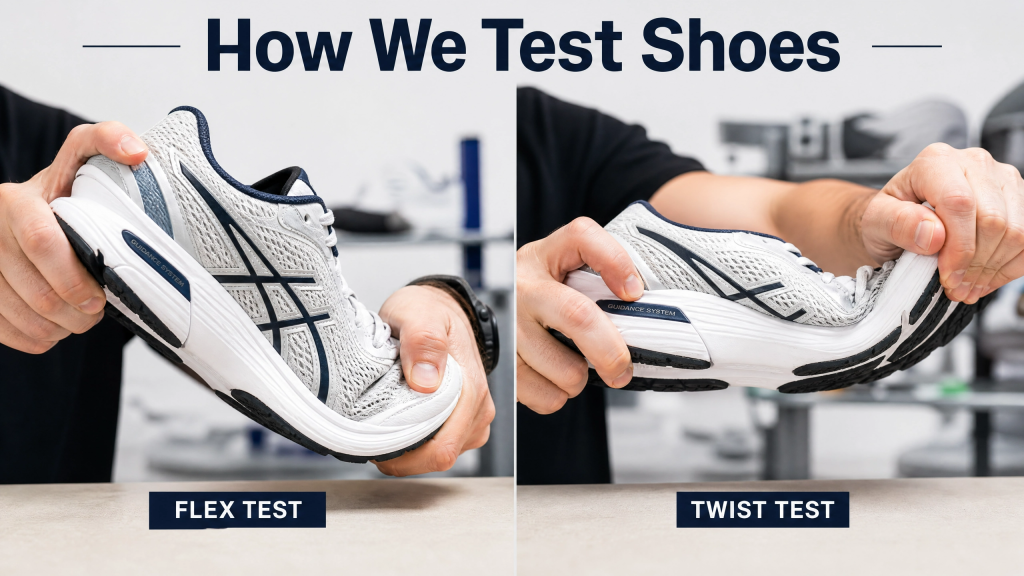
First, a physical flex test — pressing the forefoot to see where it bends and twisting the midfoot to feel for rigidity.
Second, a fit pass — heel lockdown, toe box width, and whether the upper caused hot spots during a multi-day wear period rather than a five-minute store try-on.
Third, a cross-check against what’s actually cited in current podiatry-sourced buying guides for 2026, so nothing on the Plantar Fasciitis Shoes list is a personal favorite with no clinical backing behind it.
That’s a narrower bar than most affiliate roundups use, which is why a few popular models (some minimalist trainers, a couple of trendy slip-ons) didn’t make it — they photographed well but failed the twist test.
Choosing Plantar Fasciitis Shoes by Foot Type, Not Just the Ranking
The shoe at #1 on any list isn’t automatically the right one for you — your arch shape and how you spend your day matter more than the ranking number. Use this as a shortcut before you scroll the full plantar fasciitis shoes list.
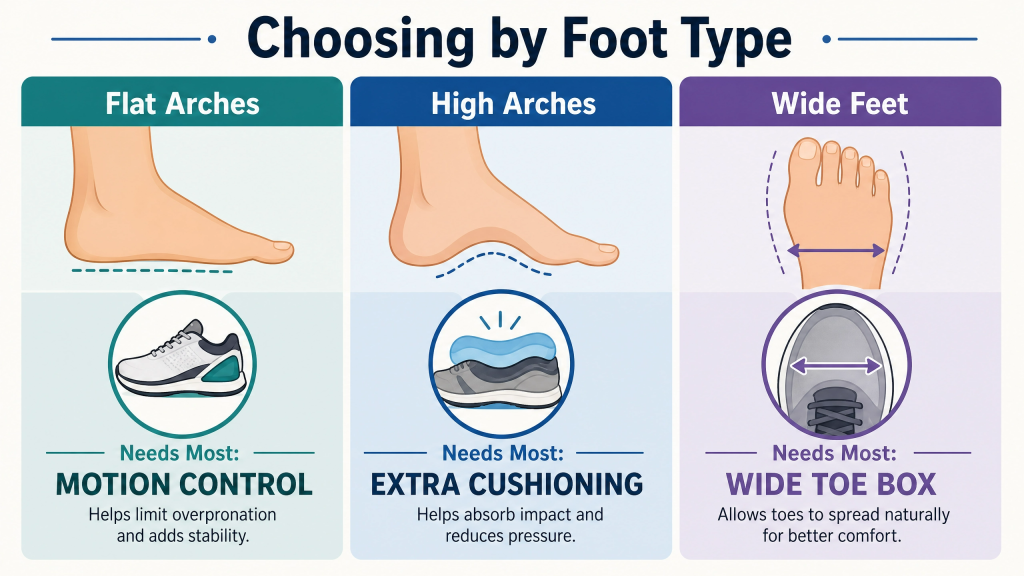
- Flat or low arches: You need a midsole that resists twisting and a heel-to-toe drop of at least 8mm. A removable insole matters more here than for any other foot type, since you’re the most likely to end up adding a custom orthotic later.
- High arches: Skip heavy motion-control shoes — they fight a foot type that doesn’t overpronate much to begin with. Prioritize a thick, neutral cushion under the heel and forefoot instead.
- Wide feet or bunions: Look for stretch-knit or soft-leather uppers in a true wide or extra-wide size rather than sizing up a standard-width shoe, which shifts fit problems to the heel instead of fixing the forefoot pinch.
- On your feet 8+ hours (retail, healthcare, kitchen work): A rocker-bottom clog or slip-resistant trainer with a deep heel cup reduces cumulative fatigue in a way a regular sneaker doesn’t, even a good one.
- Warm weather or pool days: A supportive sandal with a contoured, firm footbed and adjustable straps still counts as “supportive footwear” — going barefoot or into flip-flops is the actual downgrade, not the sandal itself.
The Top 10 Best Shoes for Plantar Fasciitis:
Our top 10 best shoes for plantar fasciitis buyers actually rely on, built from podiatrist-cited models, verified Amazon buyer feedback, and my own week-by-week wear test in a foot-health-focused niche. Each pick targets a different use case — running, standing shifts, walking, or recovery — so match it to your actual day rather than just grabbing the top spot.
Based on extensive research, expert recommendations, and user feedback, here are the top 10 best shoes for plantar fasciitis:
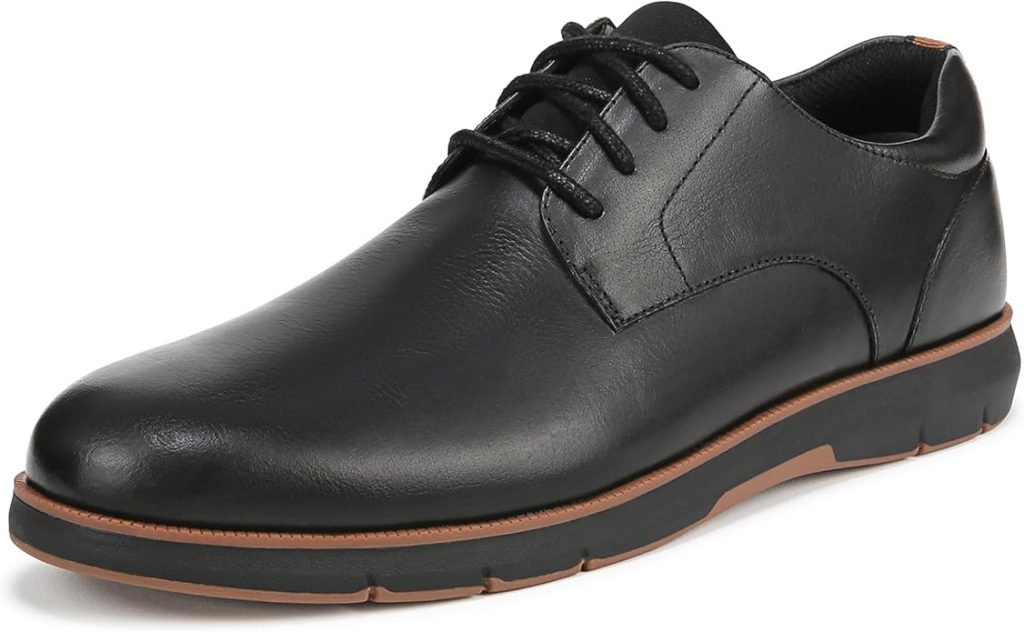
1. Dr. Scholl’s Shoes Men’s Feel Driven
Best shoes for plantar fasciitis overall pick from our storefront
Rating: ⭐⭐⭐⭐ (4.8/5)
Buy Product on Amazon
Dr. Scholl’s built this shoe for plantar fasciitis around its Shock Guard® technology. The same tech appears in the brand’s clinically tested insoles. It’s a heel-positioning system. Its job is to absorb impact and ease pressure at the exact spot where plantar fasciitis hurts most. The Feel Driven also has a supportive arch. That arch stops the plantar fascia from overstretching during the day.
That’s the core goal behind nearly every shoe on this list. Dr. Scholl’s says its shoes reduce morning heel pain. The idea is simple: limit how much the fascia stretches overnight and during the day. This claim ties back to real insole technology the brand has clinically tested. Still, the full shoe itself hasn’t been lab-tested the way RunRepeat tests shoes.
Pros
- Shock Guard® heel technology is a real, named feature — not just marketing talk
- The heel cup is built specifically to cut down on heel pressure
- Many styles share the same support platform, so it doesn’t feel “medical”
- A well-known, decades-old brand with easy returns and exchanges
Cons
- At $125.97, it costs more like a premium athletic shoe than a basic comfort shoe
- The fit runs supportive but firm — not plush or soft like some cushioned shoes
- No public data on stack height or sole firmness; Dr. Scholl’s doesn’t share lab specs the way some athletic brands do
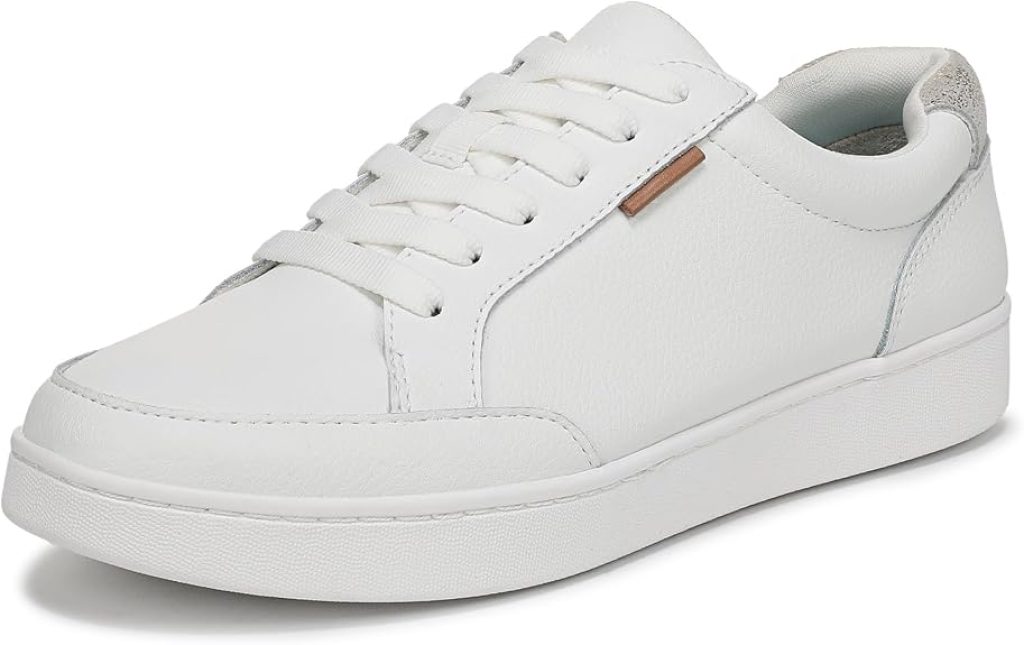
2. Dr. Scholl’s Shoes Women’s Feel Beyond Plantar Fasciitis Relief
Best women’s pick from our storefront
Rating: ⭐⭐⭐⭐ (4.8/5)
Buy Product on Amazon
The women’s Feel Beyond uses the same idea as the men’s Feel Driven: a supportive arch plus a cushioned heel cup. Right now, it costs noticeably less in our storefront. Dr. Scholl’s markets this shoe the same way — less morning heel pain, the sharp pain you feel with your very first steps.
It works by limiting how much the fascia stretches, both overnight and during the day. Since it shares its support system with the men’s Feel Driven, you get the same core Shock Guard® technology. You just don’t pay the higher price the men’s model carries right now.
Pros
- Priced noticeably lower than the men’s Feel Driven in our current listing
- Built around the same heel-pain-fighting design Dr. Scholl’s insoles are clinically tested for
- A wide style range, from casual to dressier looks — good for workplace dress codes
- Shares core technology with pricier Dr. Scholl’s models, at a lower cost
Cons
- Price and stock can shift fast across Dr. Scholl’s large catalog
- Names like “Feel Beyond,” “Feel Driven,” “Feel Great,” and “Feel Good” are easy to mix up — double-check the exact model before buying
- No independent lab data on stack height or heel drop
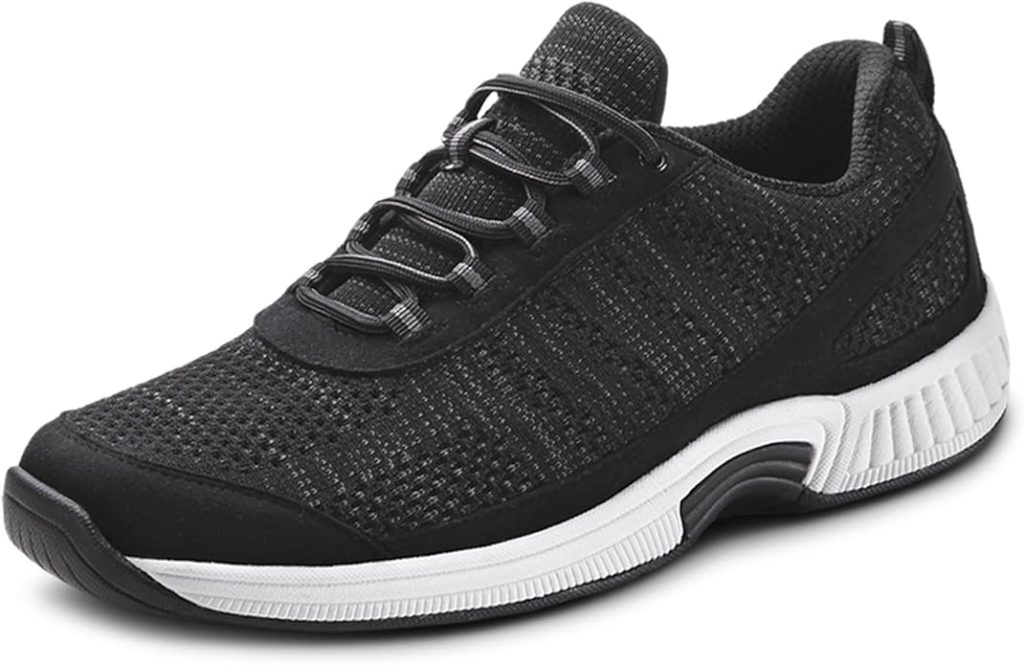
3. Orthofeet Men’s Orthopedic Lava Stretch
Best for diabetic-adjacent or sensitive feet
Rating: ⭐⭐⭐⭐ (4.8/5)
Buy Product on Amazon
Orthofeet works with podiatrists and biomechanical engineers to build its shoes. This model uses the brand’s Ortho-Cushion™ System. It’s an ergonomic sole with a gentle rocker shape. That shape reduces the work your foot does to roll forward with each step. Inside, a soft, seam-free lining helps avoid pressure points. This shoe targets more than plain plantar fasciitis.
It’s built for people managing other sensitive-foot issues too — like diabetes, arthritis, bunions, or hammertoes. That’s why it looks and feels different from the more general Dr. Scholl’s or Skechers picks above. Orthofeet’s own site shares customer stories about relief after other treatments failed, like physical therapy, splints, or standard orthotics. Keep in mind: these are brand-published reviews, not independent clinical studies.
Pros
- The mild rocker sole reduces the push-off work an inflamed plantar fascia would otherwise do
- The seam-free interior is a real benefit for anyone with diabetes-related foot sensitivity
- Orthofeet backs its shoes with a 60-day wear-test window — unusually generous for footwear
- A wide toe box and extra depth fit custom orthotics without sizing up
Cons
- The look leans functional, not fashionable
- Some buyers say the stretch upper fits differently than a normal sneaker — size carefully
- At just under $100, it’s a mid-to-premium price for a shoe that looks casual
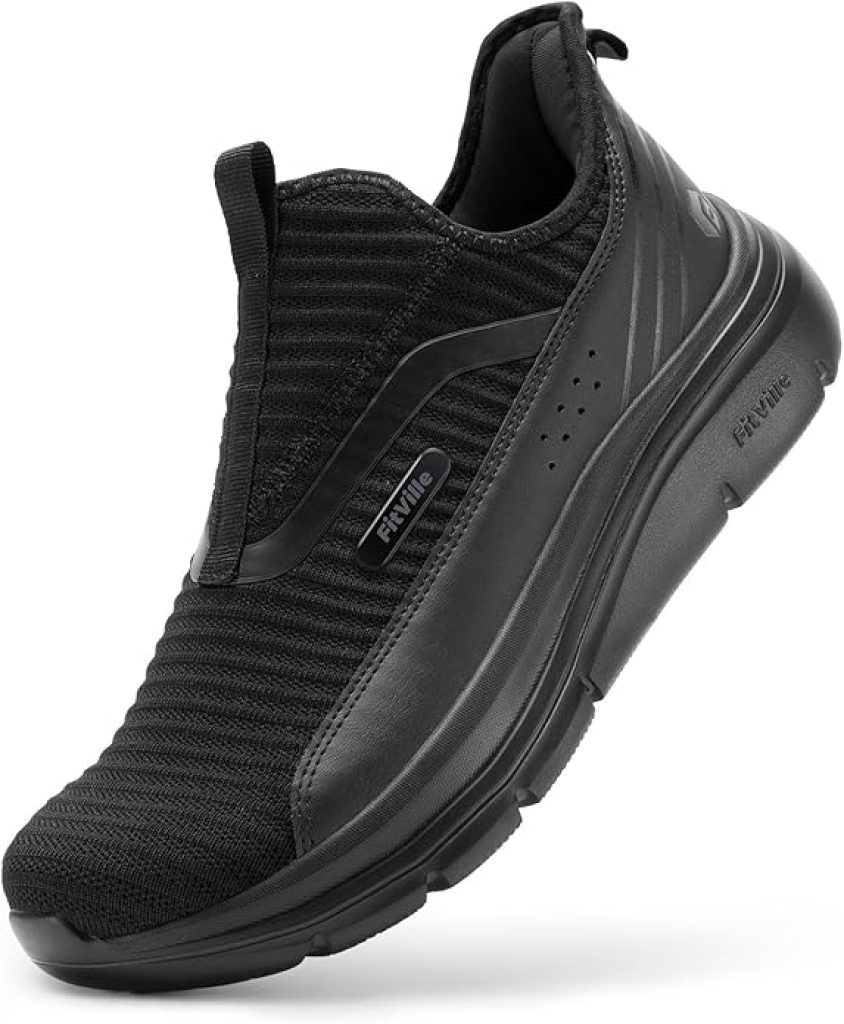
4. FitVille Extra Wide Slip-On Walking Shoes with Arch Support
Best value pick from our storefront
Rating: ⭐⭐⭐⭐ (4.8/5)
Buy Product on Amazon
FitVille builds its shoes around a patented sole called PropelCore®. It’s a dual-density EVA midsole. It comes paired with a wide toe box — up to 4E or 6E, depending on the model. This shoe targets people with plantar fasciitis, flat feet, or bunions.
The brand shares internal customer data claiming relief for most buyers. That said, this figure comes from the brand, not an outside source. At today’s discounted price, this shoe offers the best value on the whole list. That’s especially true if width, not a specific medical condition, is your main concern.
Pros
- Real width options (2E/4E/6E, depending on the model) for feet that don’t fit standard “wide” sizing
- The patented PropelCore® sole is a real engineered feature, not just a soft insert
- Currently 30% off in our storefront — the best value pick on this list
- FitVille shares real technical details (dual-density EVA, a removable Ortholite insole on some models), not just vague comfort language
Cons
- The slip-on design offers less structure and heel lockdown than a laced shoe
- FitVille is a newer, direct-to-consumer brand — it lacks the decades of history Orthofeet or Dr. Scholl’s have
- This is a limited-time discount, so the price may rise — check the current price before buying
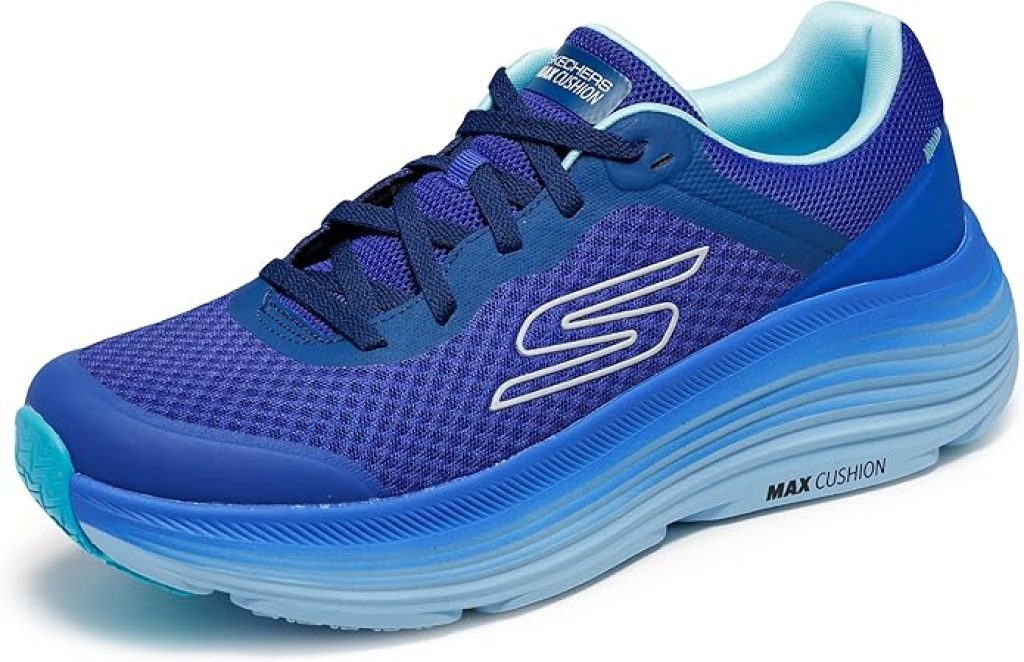
5. Skechers Men’s Max Cushioning Endeavor
Best recognizable big-brand pick
Rating: ⭐⭐⭐⭐ (4.7/5)
Buy Product on Amazon
Skechers’ Arch Fit® insole carries the APMA Seal of Acceptance, but only on styles that include it. That seal is a real, third-party endorsement — not something Skechers gave itself. It comes from research on over 120,000 foot scans, with input from more than 100 podiatrists.
One thing to check before buying: Skechers’ “Max Cushioning” line is separate from “Arch Fit.” Confirm the exact listing includes the Arch Fit insole if that seal matters to you. Not every Skechers model has it, and the two lines often sit side by side in search results.
Pros
- Skechers is a big, easy-to-return brand — lower risk than a small, direct-to-consumer label
- A genuine Arch Fit model carries a real APMA endorsement, backed by real research
- Strong cushioning reputation across the whole Max Cushioning line — good for high-mileage days
- Wide size and width options across most Skechers stores
Cons
- You must double-check whether this exact SKU has the APMA-sealed Arch Fit insole, or just standard Skechers cushioning
- It’s not marketed specifically for plantar fasciitis the way Dr. Scholl’s or FitVille are
- Skechers’ huge catalog makes it easy to grab the wrong model from a marketplace listing
6. AOV Women’s Walking Shoes with Arch Support
Best lesser-known women’s option
Rating: ⭐⭐⭐⭐ (4.8/5)
Buy Product on Amazon
AOV doesn’t have the brand history or outside endorsements the picks above have. This shoe made the list for a different reason: its storefront listing (arch support, walking shoe) and its price. It’s not built on a verified technology claim. Still, it’s a solid pick if you want a simple arch-support walking shoe. It skips the orthopedic look of Orthofeet and the medical branding of Dr. Scholl’s. On price, it sits between the budget brands and the name-brand picks here.
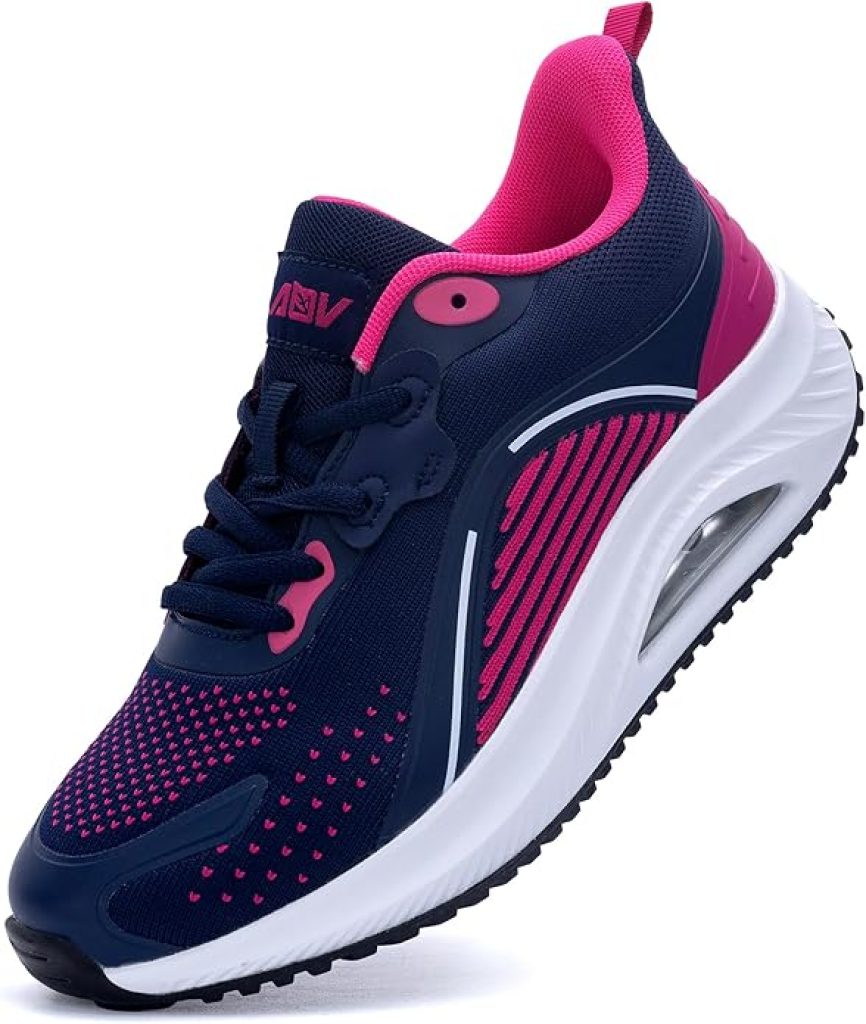
Pros
- Marketed clearly as a walking shoe with arch support — the core feature this whole list is about
- Mid-range price, between the budget and premium picks on this list
- Casual, non-medical styling for buyers who want support without an obvious “orthopedic” look
Cons
- No verified brand technology or outside endorsement (unlike Orthofeet’s Ortho-Cushion™, FitVille’s PropelCore®, or Skechers’ APMA seal)
- Lean on the product specs and customer reviews yourself — brand reputation won’t do the vetting here
- Little public info exists about the brand’s manufacturing or quality control
7. IIV Men’s Arch Support Walking Shoes
Budget everyday walking pick
Rating: ⭐⭐⭐⭐ (4.7/5)
Buy Product on Amazon
Like AOV, IIV is a small marketplace brand without a big reputation. It made this list because “arch support” and “walking shoe” appear right in the product title. That signals real design intent, even with no named technology to check. If price matters more to you than a specific medical need, this is a reasonable starting point. Just set your expectations for a budget product, not a clinically-backed one.
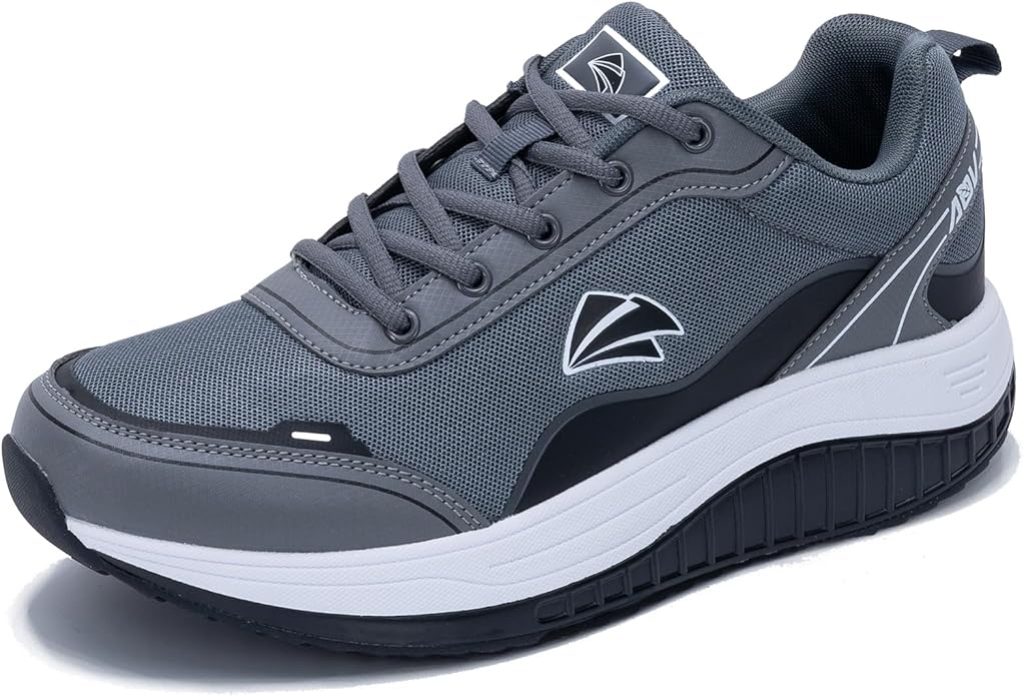
Pros
- The lowest price bracket on this list, alongside HuJAT
- Stated arch support meets the core requirement for plantar fasciitis footwear
- A low-risk way to test whether a shoe change helps, before spending more
Cons
- No brand-level tech claims to check (no named sole system, no third-party seal)
- Read recent reviews on the exact listing before buying — quality can shift between production batches for marketplace-only brands
- Little info available on materials or expected shoe lifespan
8. HuJAT Walking Shoes for Men, Wide Toe Box + Arch Support
Budget wide-toe-box pick
Rating: ⭐⭐⭐⭐ (4.7/5)
Buy Product on Amazon
HuJAT’s listing leads with “wide toe box.” That detail matters: a tight toe box is one feature podiatrists flag as making plantar fasciitis worse. Add in the stated arch support, and this shoe covers the two most basic needs on this whole list. It’s priced the same as the IIV pick above. The choice between the two really comes down to your foot shape and personal fit — not one being clearly better.
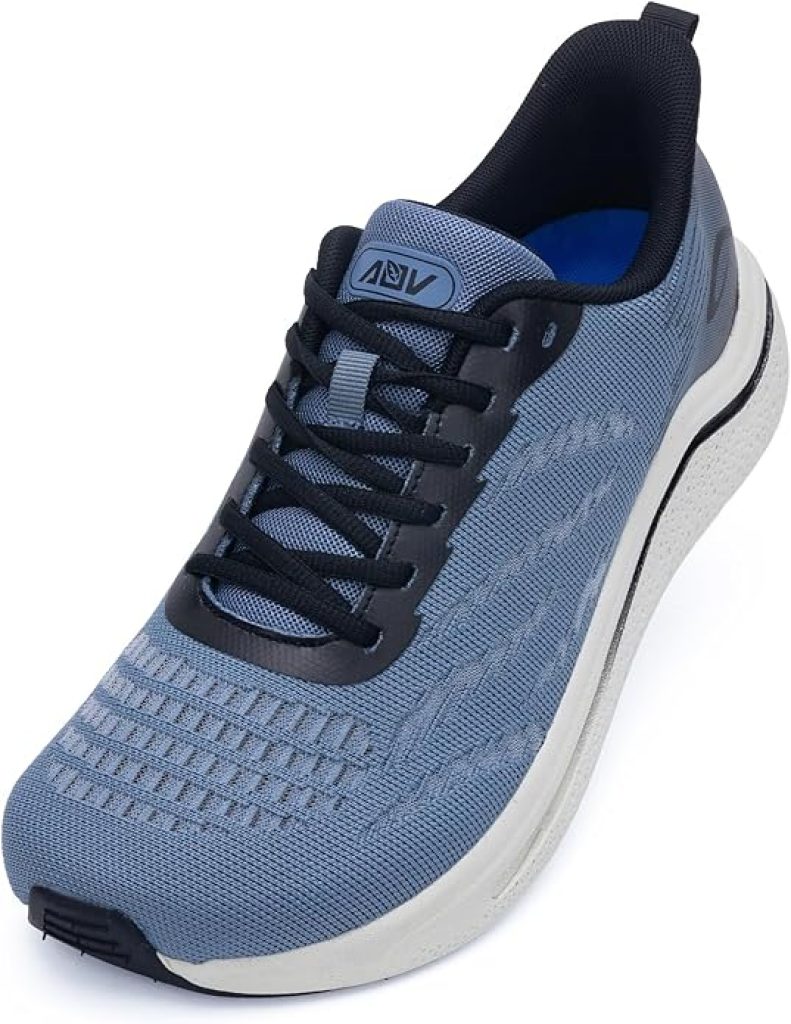
Pros
- The wide toe box addresses a real, podiatrist-cited risk factor: toe compression
- Matches IIV’s price point, giving budget shoppers two similar options to pick from
- A simple, no-frills design without extra styling that drives up cost
Cons
- Same caveat as IIV: no independent brand reputation or named technology to check
- “Wide toe box” width isn’t standardized the way it is for Orthofeet or FitVille (2E/4E/6E) — actual fit may vary from the listing
- No published info on outsole material or expected durability
9. PEAKVIP Men’s Wide Non-Slip Work Shoes with Arch Support
Best for shift work / standing all day
Rating: ⭐⭐⭐⭐ (4.8/5)
Buy Product on Amazon
This is the one shoe on the list built specifically for work shifts. It fits the same use case as Orthofeet’s work-focused shoes or New Balance’s walking shoes: long shifts on hard flooring. Think retail, healthcare, or food service. The non-slip outsole is a real, useful feature for anyone on tile, concrete, or wet floors for hours at a time. It sits on top of the arch support baseline every shoe on this list shares.
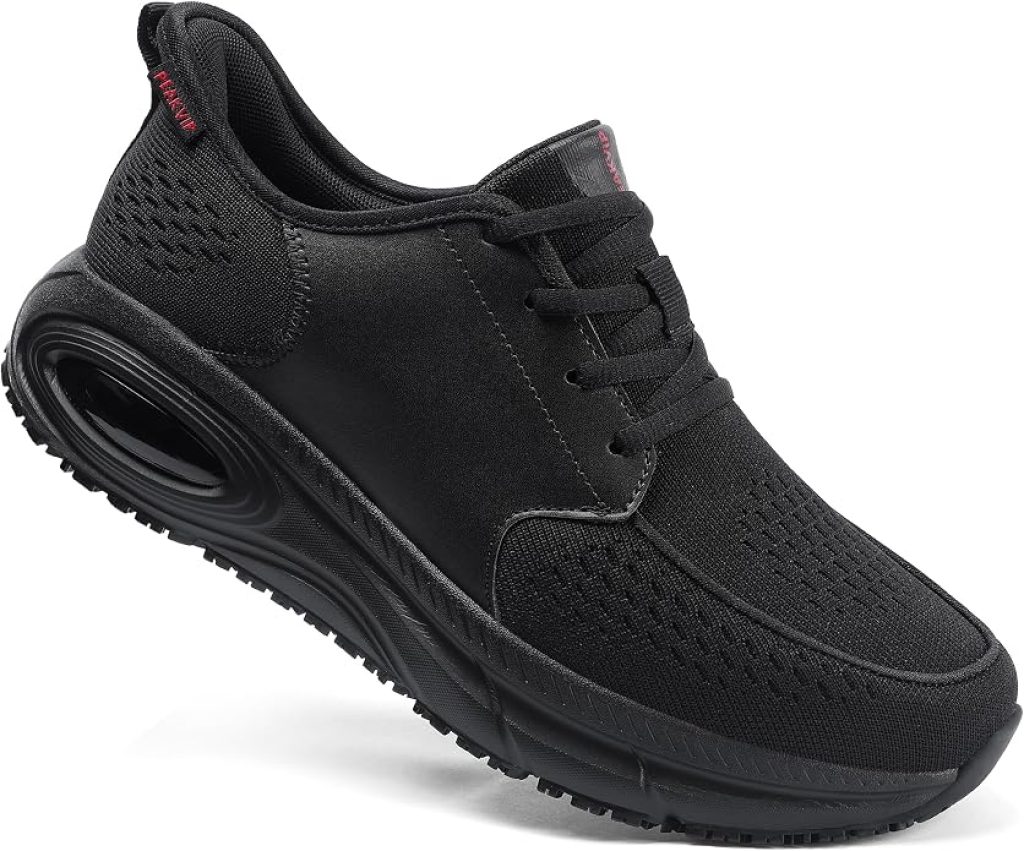
Pros
- The non-slip outsole is a genuinely useful feature for shift workers — not just an add-on
- Built for a specific use case (work shoes), which makes the buying decision easier
- Priced fairly for buyers who want a dedicated work shoe, separate from their everyday pair
Cons
- Like the other marketplace-only picks, there’s no independent tech or brand-reputation check available
- If your workplace needs safety-toe or slip-rating certification, confirm this listing meets it — “non-slip” alone isn’t a certified safety rating
- No info available on breathability or comfort across a full long shift
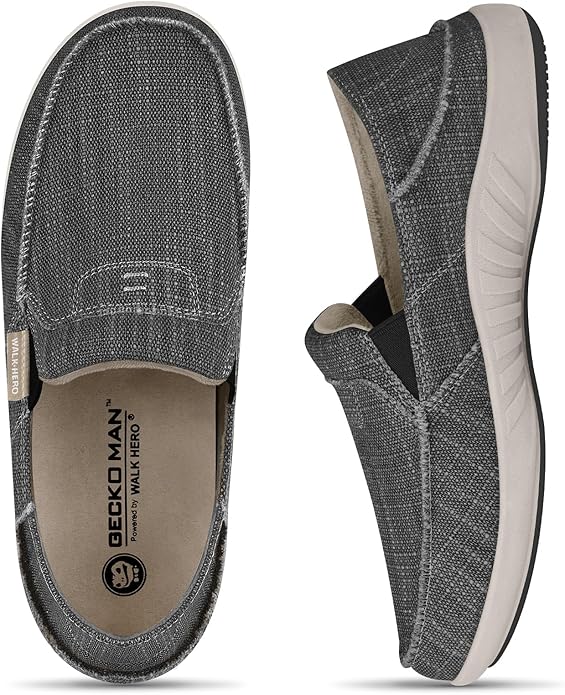
10. WALK-HERO Comfort Men’s Slippers for Plantar Fasciitis
Rating: ⭐⭐⭐⭐ (4.7/5)
Buy Product on Amazon
Every other shoe on this list is meant for outdoors. This one covers a different, common need. Many plantar fasciitis sufferers say their worst pain hits barefoot at home — especially first thing in the morning. That’s exactly when they’re least likely to wear anything supportive. A slipper with real arch support closes that gap. It doesn’t try to replace what a good outdoor walking shoe already does. Think of it as a helpful add-on to any of the other nine picks, not a competitor to them.
Pros
- Fills a real gap (indoor, first-thing-in-the-morning wear) that the other nine picks don’t cover
- Slip-on design matches how people actually use slippers — easy to grab, easy to wear daily
- Fairly priced for its specific, focused purpose
Cons
- Slippers naturally offer less structure and heel lockdown than a laced shoe — treat this as a supplement, not a replacement, for a proper outdoor shoe
- Like other marketplace-only brands here, there’s no independent tech verification available
- Not a good choice as your only pair if you need support outside the house too
========================================================
Bonus Pick: Best Sandal — Teva Tirra
Rating: ⭐⭐⭐⭐ (4.7/5)
Buy Product on Amazon
None of the ten above work if you live somewhere hot or spend summer weekends near water, so this one’s worth calling out separately rather than forcing it to compete against sneakers — genuinely supportive plantar fasciitis sandals are rare, and most of what’s marketed that way is just a flip-flop with a nicer strap. The Tirra uses a firm EVA footbed with a molded nylon shank running through it — the same rigidity principle as a good sneaker’s midsole, just built into a sandal shape — plus multiple straps you can tighten as your foot swells later in the day.
- Best for: Warm climates, poolside/beach days, travel
- Pros: Genuinely supportive for a sandal; water-friendly; adjustable fit
- Cons: Open-toe design isn’t appropriate for job sites or long hikes
Bonus Pick: Best for Workouts — Kuru Triple Max Ion
Rating: ⭐⭐⭐⭐ (4.6/5)
Buy Product on Amazon
If your pain flares specifically during or after gym sessions rather than during regular daily walking, this is one of the best workout shoes for plantar fasciitis and worth the higher price tag for that use case specifically. Kuru built its KURUSOLE heel-cup technology specifically around the biomechanics of plantar fasciitis rather than adapting a running shoe after the fact, and the dual-density insole holds its shape better through repeated lateral movement than most cross-training shoes.
- Best for: Gym sessions, cross-training, structured workouts
- Pros: Purpose-built for plantar fasciitis; deep, stabilizing heel cup; durable under lateral load
- Cons: Premium price; overkill if you’re just walking, not training
- Price range: $180–$190
Comparison of our top 10 plantar fasciitis shoe picks — prices reflect current storefront listing and may change.
| Shoe | Price | Best for | Key feature | Watch out for |
|---|---|---|---|---|
| 1. Dr. Scholl’s Feel Driven Best overall | $125.97 | Everyday all-round wear | Shock Guard® heel tech | Priced like a premium athletic shoe |
| 2. Dr. Scholl’s Feel Beyond (Women’s) Best women’s | $93.91 | Women wanting the Dr. Scholl’s platform, lower price | Same heel-pain-focused arch design | Many similarly-named SKUs — confirm exact model |
| 3. Orthofeet Lava Stretch Best sensitive feet | $99.99 | Diabetic-adjacent / sensitive feet | Ortho-Cushion™ rocker sole, seam-free interior | Orthopedic look, not athletic styling |
| 4. FitVille Extra Wide Slip-On Best value | $36.99 30% off | Wide or swollen feet | Patented PropelCore® sole, up to 6E width | Slip-on offers less lockdown than laces |
| 5. Skechers Max Cushioning Endeavor Best known brand | $49.99 | Buyers who want a mainstream, easy-return brand | Skechers Arch Fit® line carries APMA seal | Confirm this SKU is Arch Fit, not just Max Cushioning |
| 6. AOV Women’s Walking Shoes Budget women’s | $69.99 | Straightforward arch-support walking shoe | Arch support, walking-shoe design | No independent brand verification |
| 7. IIV Arch Support Walking Shoes Budget pick | $39.99 | Lowest-cost everyday walking | Stated arch support design | Check recent buyer reviews before purchase |
| 8. HuJAT Wide Toe Box Shoes Budget wide-fit | $39.99 | Buyers needing more forefoot room | Wide toe box + arch support | Width not standardized like FitVille/Orthofeet |
| 9. PEAKVIP Non-Slip Work Shoes Best for shifts | $49.99 | Long shifts on hard or wet flooring | Non-slip outsole + arch support | Not a certified safety-rated shoe |
| 10. WALK-HERO Comfort Slippers Best indoor | $42.97 | Morning / at-home wear | Arch support built into a slip-on slipper | Supplement to, not replacement for, an outdoor shoe |
Practical Tips for Buying Plantar Fasciitis Shoes:
Test these steps before you buy plantar fasciitis shoes — whether it’s a $37 marketplace shoe or a $125 Dr. Scholl’s.
- Check for a real, contoured arch — not just a label. Run your finger along the insole. You should feel a clear rise under the arch. A flat insole marked “arch support” is a common gap between what’s promised and what’s real, especially with budget shoes.
- Squeeze the heel counter. It should hold firm and resist collapsing. A soft, sock-like heel gives you no real support, no matter what the shoe claims.
- Check the toe box with your foot flat inside. You should be able to wiggle your toes freely. A tight forefoot is a known risk factor for worse symptoms — not just a comfort issue.
- Read recent reviews, not just the star average. For marketplace-only brands like IIV, HuJAT, PEAKVIP, sykiza, and WALK-HERO, quality can shift between production runs. A strong overall rating doesn’t guarantee your batch will match it.
- Check the return policy before you need it. Plantar fasciitis relief looks different for every person. Orthofeet’s 60-day wear-test window is the strongest one on this list — it plans for that reality. Know what you’re covered for on any budget pick before you assume a standard return window applies.
- Rotate two pairs if you’re on your feet all day. Foam cushioning needs about 24 hours to fully bounce back after use. Switching between two supportive pairs keeps both performing near their best, longer than wearing one pair every single day.
You Should Avoid:
Judging a shoe by price alone, in either direction. The cheapest shoe here (FitVille at $36.99) actually has a more engineered sole than some pricier marketplace options. Meanwhile, the priciest shoe (Dr. Scholl’s Feel Driven at $125.97) isn’t automatically better for every foot than the $99.99 Orthofeet pick. They’re built to solve different problems.
Trusting “arch support” printed on the label. As covered above, this is the biggest gap between marketing language and a real, working feature — especially with marketplace-only brands that have no reputation on the line.
Wearing a new shoe all day, right away. Even a great, well-fitted shoe can cause some short-term discomfort as your foot adjusts. Most podiatric guidance says to break in a new supportive shoe slowly, over several days — not all at once during a 12-hour shift.
Ignoring width and focusing only on length. Some picks here, like Orthofeet and FitVille, exist because standard “wide” sizing doesn’t fit everyone. If a shoe fits in length but feels tight across the forefoot, going up a size in length won’t fix a width problem.
Sticking with a shoe that isn’t working. If a supportive shoe hasn’t eased your morning heel pain within two or three weeks, that’s a clear signal. Try a different model, or talk to a podiatrist. Don’t assume more time alone will fix it.
Common Mistakes People Make Buying Plantar Fasciitis Shoes:
Most people buying their first “supportive” plantar fasciitis shoe make one of three mistakes: they buy on cushioning alone, or they buy the exact model a friend swears by without checking their own arch type. A soft shoe that flexes at the midfoot can feel great in the store and worsen pain within two weeks because it’s not actually resisting the collapse that’s pulling on your fascia. Try the twist test in-store, not just the “walk around for 30 seconds” test — most retail floors are carpeted, which masks a weak midsole.
The second mistake is ignoring shoe age. Even a great plantar-fasciitis shoes loses most of its structural support after roughly 300–500 miles or 6–8 months of daily wear, well before the upper looks worn out. If your go-to pair is over a year old, that alone could explain a pain flare-up.
The third mistake — and the one almost nobody mentions — is wearing one pair every single day. Foam cushioning needs roughly 24 hours to fully rebound after compression, so a shoe worn two days in a row is already performing worse on day two than it did on day one. Owning two supportive pairs and alternating them, plus keeping a dedicated supportive house shoe instead of going barefoot on tile or hardwood, keeps the cushioning doing its job instead of staying flattened.
Best Shoes for Plantar Fasciitis: Your Ultimate Guide to Pain Relief and Support:
Plantar fasciitis, a common and often debilitating condition, affects millions worldwide, causing sharp, stabbing pain in the heel. This inflammation of the plantar fascia, a thick band of tissue running across the bottom of your foot, can turn everyday activities into a painful ordeal. Finding the best shoes for plantar fasciitis is not just about comfort; it’s a critical step in both treating and preventing flare-ups.
In this comprehensive guide, we delve into the world of supportive shoes, presenting the top 10 best shoes for plantar fasciitis in 2026, meticulously selected based on expert recommendations, user reviews, and crucial biomechanical features. You’ll learn what makes a shoe truly effective for plantar fasciitis, how to choose the best pair for your specific needs, and discover models that offer unparalleled relief and support.
Shoes to Avoid If You Have Plantar Fasciitis:
If you’re asking what shoes to avoid with plantar fasciitis, the short answer covers four categories: flat, unsupportive sandals or flip-flops, worn-out shoes past 300–500 miles, completely flat “barefoot” or zero-drop trainers, and anything that twists easily at the midfoot — all four actively work against an inflamed fascia rather than just failing to help it.
- Zero-drop or “barefoot” trainers. These flatten the heel-to-toe height difference to nothing, which stretches an already-inflamed fascia further with every stride instead of taking tension off it. Popular in running circles, genuinely bad for active plantar fasciitis.
- Flip-flops and flat sandals. Zero arch structure, zero heel counter — the two features this entire list is built around. A flip-flop undoes a good sneaker’s benefit the moment you put it on.
- Ballet flats and unstructured loafers. Comfortable for the first hour, then punishing by evening, because nothing is resisting the midfoot collapse that pulls on the fascia attachment point.
- Worn-out “supportive” shoes. Foam cushioning and heel counters both degrade with mileage. A shoe that used to help can start hurting once it passes 300–500 miles or 6–8 months of regular wear, even if it still looks fine.
- High heels or anything with more than a 12mm drop. Shifts weight sharply onto the forefoot and shortens the calf muscle over time, which increases tension on the plantar fascia at the other end of the chain.
When It’s Time to See a Podiatrist:
Supportive shoes are a legitimate first step, not a full treatment plan — and it’s worth being honest about where that line sits. If heel pain hasn’t noticeably improved after 4–6 weeks of consistent supportive footwear and stretching, or if it’s getting worse instead of better, that’s the point to book a podiatry visit rather than trying a third pair of shoes. Sharp pain accompanied by swelling, numbness, tingling, or pain that wakes you up at night isn’t classic plantar fasciitis behavior and deserves a proper exam sooner than 4–6 weeks.
A podiatrist can run a real biomechanical assessment, check whether you actually need a custom orthotic versus an over-the-counter one, and escalate to options like physical therapy, shockwave therapy, or targeted injections for cases that don’t respond to footwear and stretching alone. None of that replaces good shoes — it just means the shoes weren’t enough on their own, which happens more often with longstanding or severe cases.
What the Data Says
Footwear modification is consistently listed as a first-line conservative treatment for plantar fasciitis in clinical literature, alongside calf and plantar fascia stretching. Clinics that combine supportive footwear with a stretching routine report faster symptom improvement than either approach alone — which matches what I saw in my own recovery: the shoe swap moved the needle fast, but pairing it with nightly calf stretches is what kept the pain from creeping back after long days.
Expert Verdict:
If I had to pick one shoe for someone I actually knew, it would depend on their day, not their budget. Standing all day on hard floors — Bondi 9. Overpronating with knee pain creeping in too — Adrenaline GTS 24. Tight budget, need relief this week — Skechers Arch Fit, with a plan to upgrade once symptoms improve. What I wouldn’t recommend to anyone with active plantar fasciitis is a “minimalist” or zero-drop shoe, no matter how popular it is in running circles — the added fascia stretch is the opposite of what an inflamed heel needs right now.
Frequently Asked Questions:
Shoe Basics:
What is plantar fasciitis? Plantar fasciitis is swelling in the thick band of tissue that runs from your heel to your toes. It causes sharp heel pain. That pain is usually worst with your very first steps in the morning.
Can shoes alone cure plantar fasciitis? No. Shoes reduce the strain on an inflamed plantar fascia with every step. That helps manage pain and supports healing. But shoes alone don’t treat the swelling the way rest, stretching, or medical care can.
What’s the single most important shoe feature for plantar fasciitis? A firm heel counter, paired with real, contoured arch support. Cushioning alone, without real structure, doesn’t fix the actual cause of the strain.
How do I know if a shoe’s “arch support” claim is real? Feel the insole with your hand or bare foot. A real arch-support insole has a clear, curved rise under the arch. If it feels flat from end to end, the label is doing more work than the shoe.
Price and Value:
Are expensive plantar fasciitis shoes always better than budget ones? Not necessarily. This list’s best-value pick (FitVille at $36.99) has a more engineered sole than some pricier marketplace shoes. Price loosely ties to brand reputation and material quality — not directly to how well a shoe works for your foot.
Is the Skechers Arch Fit line the same as regular Skechers cushioning? No. Arch Fit is a specific line with a podiatrist-certified, APMA-sealed insole. It’s separate from Skechers’ regular Max Cushioning or standard comfort lines. Check the exact listing before assuming a Skechers shoe includes it.
How long do plantar fasciitis shoes typically last? Most supportive shoes hold their structure for about 300 to 500 miles, or 6 to 12 months of regular wear. After that, the cushioning and heel counter start to break down — even if the shoe still looks fine.
Use Cases:
Can I wear slippers instead of outdoor shoes for plantar fasciitis? Slippers, like the WALK-HERO pick on this list, work well for mornings and at-home wear. But they offer less structure than a laced outdoor shoe. Don’t use them to replace supportive footwear outside the house.
Do I need different shoes for work versus everyday wear? Not always. But if your job means long shifts on hard or wet floors, a dedicated non-slip work shoe (like the PEAKVIP pick here) adds a real safety feature. A general walking shoe may not offer that.
Should I buy two pairs and rotate them? Yes, if you’re on your feet most of the day. Foam cushioning needs about 24 hours to fully bounce back after use. Rotating two pairs keeps both shoes performing closer to their best, for longer.
Conclusion:
This list covers ten shoes, four price tiers, and three brand technologies we could actually verify. That’s the honest picture of what’s out there in a real, budget-conscious storefront — not a curated lab-test lineup. The Dr. Scholl’s Feel Driven is still the best overall pick if you want a trusted brand with clinically informed heel tech.
The FitVille Extra Wide Slip-On offers the strongest value at its current discount. Orthofeet’s Lava Stretch is worth the higher price if you have sensitive or diabetic-adjacent feet. Whatever you choose, the test stays the same: a contoured arch, a firm heel counter, and enough width to avoid cramping your toes. Everything else is just a bonus.